



Clients and Projects Dashboard | FireFlight
Last updated: April 2026

Clients and Projects Dashboard

23 live metrics across clients, projects, work orders, and tasks active counts, overdue flags, task completion rates, scheduled versus actual hours, and today's activity. All from one real-time view, with no status reports required to produce it.

FireFlight's Clients and Projects Dashboard gives operations managers a single view of everything moving across their client portfolio and project queue: active clients and projects, work order status, overdue flags, task completion rates by type, hours expended versus scheduled, and today's task activity. Every metric updates in real time. Nothing on this dashboard requires a manual refresh or a status meeting to stay current.
FireFlight Clients and Projects Dashboard showing 23 live operational metrics across client relationships and active project work

Operations managers who run multiple concurrent client engagements typically spend part of every morning figuring out what is overdue, what is at risk, and what needs attention today before the team is already deep into the day's work. That information-gathering takes time that could be spent on the work itself. FireFlight's Clients and Projects Dashboard produces that picture automatically, from live records, before the morning standup so the conversation starts from a shared understanding of what the day actually looks like rather than from each team member's individual recollection.

Schedule your free consultation

What does 23 metrics in one dashboard actually give an operations manager?

The value of the metric count is not the number itself it is that each metric answers a distinct operational question that would otherwise require opening a separate record, running a separate report, or asking someone to check and report back. Total Active Projects versus Total Overdue Projects tells you how much of your active portfolio is already past a milestone. Total Tasks Unscheduled but NOT Complete tells you how much open work has no committed timeline. Tasks Accomplished Today tells you whether the day is tracking to plan or falling behind before anyone has said anything about it.

None of these are questions that require sophisticated analysis to answer. They are questions that require current data and current data is what most operations teams do not have in a single accessible place. The Client Tracking app holds the client records, the project records carry the work order and task data, and the hours records capture what has actually been spent and what is still planned. The dashboard aggregates all of it into the 23 metrics that answer the questions an operations manager is going to ask this morning regardless of whether the dashboard exists. The dashboard just means the answers are already there when the questions come up.

Client and project operations view in FireFlight showing task activity and hours tracking across active engagements

The hours metrics tell a story that task counts alone cannot. Total Hours Expended versus Scheduled on a project shows not just where the project stands today but how the remaining committed hours compare to what has already been spent a forward-looking view of whether the project is heading toward a labor overrun before the work is done. Total Hours Actual versus Estimated adds the dimension of accuracy: a project where actual hours are consistently running above the estimate at each stage is telling you something about the original scope or the efficiency of execution that does not appear anywhere in the task completion percentages.

Today's metrics Tasks Accomplished Today, Tasks Added Today, and Total Scheduled Today function differently from the cumulative counts. They are the operational pulse of the day. A morning check of those three numbers tells an operations manager whether capacity and workload are in alignment or whether the day is already heading toward a backlog that will push into tomorrow. For service operations managing a mix of client commitments and internal project work, that intraday visibility is what prevents the daily triage that consumes management time when the picture is only clear at end of day.

How do the task status metrics work together to surface the actual backlog?

FireFlight tracks tasks across four distinct status dimensions on this dashboard: total count, completion status, scheduling status, and in-progress status. Together, those dimensions surface the actual operational backlog with more precision than a simple open-versus-closed count.

Total Tasks Unscheduled but NOT Complete is the metric that most directly represents unmanaged work open items that have not been assigned a date and have not been finished. This is the backlog that will eventually create problems but has not been given a place in the operational schedule yet. Total Tasks Scheduled but Not Complete shows the committed work that is in the queue with a date but has not finished. Total Task In Progress shows what is actively being worked right now. Running all four together, an operations manager can distinguish between work that is being actively managed, work that is planned but not started, and work that has no plan at all. The distinction matters because each category requires a different response.

Every metric on the dashboard reads from the same live records that drive client management, project execution, and work order processing. There is no separate reporting layer, no data extraction step, and no delay between when a task is updated or a work order is closed and when the dashboard reflects it. An overdue project that became overdue at 4pm yesterday shows on the Overdue Projects count this morning without anyone having to mark it as overdue manually.

PCG has been building client and project management systems for service operations since 1995 environmental consulting firms, industrial service contractors, staffing operations, and compliance-driven businesses where the relationship between client commitments and operational capacity is the central management problem. The 23-metric structure of this dashboard reflects what those operations actually need to see in one place to manage their workload without a morning's worth of report-gathering first.

How does Client Tracking connect to the dashboard metrics?

The Client Tracking app maintains the authoritative record for every client relationship in FireFlight: contact information, interaction history, project associations, milestone records, and engagement status. When a client relationship has active project work, those projects are linked to the client record. When a project attached to a client becomes overdue, that client's record contributes to the Total Overdue Clients count on the dashboard.

The connection between client records and operational metrics is what makes the Clients and Projects Dashboard different from a project management view alone. Total Active Clients is not just a count it is the number of client relationships that have open work requiring attention right now. Total Overdue Clients surfaces which relationships are at risk of delivering a poor client experience because the committed work has passed its scheduled window. For service operations where client retention depends on delivery consistency, those two numbers together tell the operations manager where relationship risk is concentrated before it becomes a client conversation about why something is late.

Ikhana on-screen guide
Meet Ikhana

Your Personal Guide on Every Page

From the first click to the final step, Ikhana, your on-screen tutor, shows you how it all works. Every field, every button, every page explained with clarity, right where you need it.

On the Clients and Projects Dashboard, Ikhana explains what each of the 23 metrics measures, how the scheduling and completion status counts interact, and how to trace an overdue flag back to the specific project or client record that triggered it. New team members learn to read the dashboard correctly on day one rather than misinterpreting a metric count for three months before someone corrects them.

Learn more about Ikhana

The full metric library

  • FireFlight Total Clients and Total Active Clients. Total Clients counts every client record in the system. Total Active Clients narrows to those with open work, current engagements, or ongoing project associations. The gap between the two shows how much of the client base is currently generating operational activity versus sitting dormant.
  • FireFlight Total Projects and Total Active Projects. Total Projects includes all project records. Total Active Projects filters to projects currently in execution started, not yet closed. The active count is the operational load measure that drives staffing and capacity decisions.
  • FireFlight Total Project Work Orders and Total Active Project Work Orders. Work orders are the execution units within projects discrete scopes of work assigned to team members or crews. The active count shows how much work is currently in motion across the project portfolio at the work order level, which is the granularity most relevant to capacity planning.
  • FireFlight Total Tasks, Total Tasks Completed, and Total Tasks In Progress. Task-level counts give the highest-granularity view of operational activity. Completed versus total shows the portfolio completion rate at a point in time. In Progress isolates what is actively being worked right now, which is the number most relevant to same-day capacity questions.
  • FireFlight Total Tasks Unscheduled, Total Tasks Unscheduled Complete, and Total Tasks Unscheduled but NOT Complete. The three-way breakdown of unscheduled tasks separates work that was completed without a formal schedule (informative but not concerning) from open work that has no committed date (the operational risk). Unscheduled but NOT Complete is the backlog that needs to be planned.
  • FireFlight Total Tasks Scheduled but Not Complete. Committed work that is in the queue with a date but has not finished. This count combined with Tasks In Progress shows the total planned workload currently active the basis for assessing whether current capacity is sufficient to meet committed timelines.
  • FireFlight Total Overdue Projects, Total Overdue Clients, and Total Overdue Project Work Orders. Three overdue counts at different levels of the hierarchy: portfolio, client relationship, and individual work order. Each serves a different management purpose. Overdue Projects drives project management conversations. Overdue Clients drives client communication. Overdue Work Orders drives daily dispatch and crew management.
  • FireFlight Total Percent by Task Type and Total Hours by Task Type. Two views of the task portfolio cut by type rather than by status. Percent by Type shows the composition of the workload. Hours by Type shows where time is actually being consumed. The two together reveal whether the task mix matches where capacity has been allocated.
  • FireFlight Total Scheduled Today, Tasks Accomplished Today, and Tasks Added Today. The intraday pulse metrics. Scheduled Today sets the expectation for the day. Accomplished Today shows actual progress against that expectation in real time. Added Today shows whether unplanned work is entering the queue and potentially displacing the planned work the earliest signal of a day that is running off schedule.
  • FireFlight Total Hours Expended and Scheduled on Project. Side-by-side view of hours already logged against a project and hours still planned for remaining work. The forward-looking component scheduled hours remaining is what converts the financial dashboard's historical cost picture into a projection of where total labor hours will land at completion.
  • FireFlight Total Hours Actual vs. Estimated. Compares logged hours against the original estimate throughout the project, not just at close-out. A consistent pattern of actual hours exceeding estimates at each stage surfaces a scoping or execution issue while the project is still in progress when the information can change the outcome rather than just explain it afterward.

What PCG learned across 31 years of client and project system builds: the operations teams that managed their workload well were not the ones with the most sophisticated project management methodologies. They were the ones where every team member was looking at the same current picture of what was active, what was overdue, and what was scheduled for today and that picture was available without a meeting to produce it.

The 23 metrics on this dashboard are not the full scope of project management. They are the specific questions that get asked every morning in every service operation, answered from live data, before the day has started without them.

What operations see after deployment

  • FireFlight Morning operational reviews start from a shared baseline rather than from each person's individual recollection of where things stand. The dashboard produces the status picture automatically. The conversation starts with what to do about it rather than with establishing what is true.
  • FireFlight Overdue items surface before clients notice them. Total Overdue Clients and Total Overdue Project Work Orders flag relationship risk and delivery risk at the same time, from the same dashboard, before the client has called to ask about a missed commitment.
  • FireFlight Unplanned backlog becomes visible and plannable. Total Tasks Unscheduled but NOT Complete isolates the open work that has no committed date. Operations managers can see the unmanaged queue and assign it to capacity rather than discovering it when a client asks why something has not happened yet.
  • FireFlight Hours overruns on projects are predictable rather than surprising. Total Hours Actual versus Estimated tracks the deviation throughout the project. A pattern of running over estimate at each stage is visible midproject, when scope and resource decisions can still be made, rather than at close-out when the only remaining decision is how to explain it.

Questions operations and client management teams ask before deploying FireFlight

FireFlight What does the Clients and Projects Dashboard show in FireFlight?
+
The dashboard shows 23 live metrics covering clients, projects, work orders, and tasks simultaneously: total and active counts for clients and projects, work order status, task completion rates, overdue projects and clients, scheduled versus actual hours, and today's task activity. Every metric updates in real time from the underlying operational records.
FireFlight How does FireFlight track overdue projects and overdue clients?
+
Overdue Projects flags any project where a defined milestone or completion date has passed without the required status update or deliverable recorded. Overdue Clients surfaces clients who have active work that has passed its scheduled completion window. Both metrics are calculated from the project and work order records in real time, so an item that became overdue this morning appears on the dashboard this morning without a manual check or a status meeting.
FireFlight What is the difference between Total Tasks Unscheduled and Total Tasks Unscheduled but NOT Complete?
+
Total Tasks Unscheduled counts every task in the system that has no scheduled date assigned, regardless of completion status. Total Tasks Unscheduled but NOT Complete narrows that count to tasks that are both unscheduled and still open the operational backlog that has not been assigned a date and has not been finished. This is the metric that most directly represents unmanaged work sitting in the queue without a committed timeline.
FireFlight How does FireFlight compare total hours actual versus estimated on projects?
+
The Total Hours Actual vs. Estimated metric compares the hours logged against work orders and tasks to the hours estimated when the project was scoped. The comparison updates as hours are recorded, so project managers can see the variance developing during the project rather than discovering it at close-out. A project consistently running over on actual hours relative to estimates signals either a scoping problem or an execution issue the dashboard surfaces the pattern early enough to investigate.
FireFlight What does Total Hours Expended and Scheduled on Project show?
+
This metric shows two numbers side by side for each project: hours already expended (logged against work orders and tasks) and hours currently scheduled for remaining work. Together they give operations managers a forward-looking view of total hours committed to a project not just what has been spent but what is still planned. For projects where labor is the primary cost driver, this metric is the earliest indicator of a hours overrun before it becomes a budget overrun.
FireFlight How does the Client Tracking app connect to the Clients and Projects Dashboard?
+
The Client Tracking app is the source record for every client relationship in FireFlight contact history, project associations, milestone records, and interaction logs. The Clients and Projects Dashboard aggregates those records into the operational metrics: active client count, overdue client flags, and task and project activity associated with each client relationship. Updates to client records or project status in Client Tracking are reflected on the dashboard immediately.
FireFlight How long does it take to deploy FireFlight client and project dashboard tracking?
+
Most operations are running live client and project dashboards in weeks, not months. The timeline depends on the number of active clients, open projects, and the complexity of the task and work order structures being configured. PCG handles data migration of existing client records and project histories. Your team does not rebuild the client database from scratch.

If your current client and project management process requires a morning of report-gathering to answer the questions this dashboard answers automatically, that time is recoverable. FireFlight pulls 23 live operational metrics from your client, project, work order, and task records continuously. The picture is current when the day starts. Configuration takes weeks, not months, and PCG handles the migration of your existing records.

Schedule your free consultation

Allison Woolbert
Allison Woolbert
Principal, Phoenix Consultants Group  |  Developer, FireFlight Data Systems

PCG founded 1995. 500+ applications built across 31 years, roughly one-third in regulated environments where software failure carries direct operational and compliance consequences. FireFlight is the platform built from that body of work. When you contact PCG, Allison is the person who answers.

phxconsultants.com LinkedIn

FireFlight Data Systems is a product of Phoenix Consultants Group. PCG founded 1995. All system configurations are custom-built for each deployment. Implementation timelines, module availability, and integration scope vary by organization. Contact PCG directly to discuss requirements specific to your operation.

Clients & Projects Dashboard

Monitor TCO over time, incorporating acquisition cost, operational expenses, and asset depreciation to drive lifecycle planning and replacement decisions.

Project Level and Financials Dashboard | FireFlight
Last updated: April 2026

Project Level and Financials Dashboard

Project profits, contract profits by year, and projected contract profits across all active work in a single live view. Every number sourced from your actual transaction records, with no manual close required to produce it.

FireFlight's Project Level and Financials Dashboard shows profitability across three distinct views: total project profits, contract profits for active work in the current year, and projected contract profits across all active contracts over all time. All three pull directly from the Accounts and Transactions general ledger. When a cost posts or revenue is recognized, the dashboard reflects it immediately.
FireFlight Project Level and Financials Dashboard showing project profits and contract profitability in real time

Most operations that manage projects and contracts find out whether a project was profitable at close-out, when the margin question has already been answered by the decisions made six months earlier. FireFlight's project financials dashboard moves that information to where it can change something during the project, while costs are still being incurred and scope is still being managed. The data is current. The calculation is automatic. The question of whether this contract is still making money has an answer today, not at the end of the engagement.

Schedule your free consultation

Why do most operations not know their project-level profitability until it is too late?

The typical sequence runs like this: project costs are tracked in one system, contract revenue is managed in another, and actual profitability is calculated by someone in finance at the end of the period by pulling numbers from both and reconciling them manually. By the time that calculation is complete, the project that is running over on labor costs has already consumed the margin that was available to fix it. The report is accurate. It is just too late to be useful.

The problem is not data availability. Most operations have the cost data and the contract data. The problem is that those two data sets live in separate places and are only brought together periodically. FireFlight solves this at the architecture level. The Accounts and Transactions app is the single financial record where both costs and revenue are categorized and stored. The Project Level and Financials Dashboard reads from that single record and produces project-level profit calculations continuously, not on a reporting schedule. The margin on a project that posted a large subcontractor invoice this morning is already reflected on the dashboard this afternoon.

Project financial planning view in FireFlight showing contract profit projections against actual performance

The Project Contract Profits report filtered to active contracts in the current year gives finance teams and project managers a shared view of where margin stands on work that is currently in progress. This is the report that answers the question a CFO or operations director is actually asking when they ask how projects are tracking: not the final number, but the current number, for the contracts that are generating revenue right now.

Projected Contract Profits extends that view across all active contracts over all time. For operations managing long-duration contracts multi-year service agreements, phased construction engagements, ongoing compliance programs the current-year view alone gives an incomplete picture. A contract that looks healthy in year two may already show a projected loss by year three based on how costs have tracked against the original estimate. That projection is visible in FireFlight while the contract is still active and the outcome is still changeable.

What is the difference between project profits and contract profits in practice?

Project Profits measures the financial result of a project against its total cost basis all revenue recognized against all costs incurred across the project lifecycle, regardless of contractual structure. This is the number that answers whether the project, as an operational unit, made money.

Project Contract Profits narrows the analysis to the contractual dimension. A single project may be governed by multiple contracts a base scope contract and a series of change orders, or a primary contract with a separate materials supply agreement. Contract Profits breaks the financial result out by those contractual boundaries rather than treating the project as a single financial unit. For operations where contract terms drive billing rates, cost recovery provisions, and margin expectations, this distinction is what makes the profitability view actionable. A project that is profitable overall may have one contract within it that is underwater, and that granularity is what Contract Profits surfaces.

Every number on the dashboard comes from the same transaction records that drive the general ledger. There is no parallel financial tracking system, no project-level spreadsheet that someone maintains separately from the accounting records, and no reconciliation step required to make the dashboard numbers match the books. The Accounts and Transactions app is the source. The dashboard is a view of it.

PCG has built financial management systems for project-based operations since 1995 environmental consulting firms, industrial service contractors, construction managers, and multi-site operators where project profitability is not an accounting exercise but an operational necessity. The three-report structure in the Project Level and Financials Dashboard reflects what those environments actually need to manage margin during a project rather than account for it after.

How does the Accounts and Transactions app power the financial dashboard?

The Accounts and Transactions app manages the full general ledger: account structure, transaction categorization, rule-based posting logic, and the audit trail that makes every entry traceable. Every financial event in FireFlight a labor cost posted to a project, a subcontractor invoice approved against a contract line, revenue recognized on a milestone completion flows through Accounts and Transactions before it appears anywhere else in the system.

The Project Level and Financials Dashboard is a structured aggregation of those records, organized by project and contract rather than by account. When both the cost records and the revenue records live in the same transaction system, the profit calculation does not require a data pull from two separate sources followed by a manual match. The match is already done at the point of entry. Project managers and finance teams see the same profit number because they are both reading from the same underlying record which is the condition that makes a financial dashboard useful rather than a source of disagreement about whose numbers are right.

Ikhana on-screen guide
Meet Ikhana

Your Personal Guide on Every Page

From the first click to the final step, Ikhana, your on-screen tutor, shows you how it all works. Every field, every button, every page explained with clarity, right where you need it.

On the Project Level and Financials Dashboard, Ikhana explains the distinction between the three profit views, how to filter by contract period, and how to trace a dashboard number back to the underlying transactions that produced it. Finance team members and project managers arrive at the same interpretation without needing a training session to align them.

Learn more about Ikhana

What the three reports give your team

  • FireFlight Project Profits Report. Measures total revenue recognized against total costs incurred across the full project lifecycle, producing a project-level profit figure that is current as of the most recent transaction. Covers all project types, all cost categories, and all revenue sources associated with the project record. The baseline view for understanding whether individual projects are financially healthy.
  • FireFlight Project Contract Profits Report (Active, This Year). Narrows the profitability view to active contracts generating revenue in the current year. Breaks margin down by contractual boundaries rather than by project, surfacing which contracts are performing to their original profit expectations and which have drifted from the terms that made them worth accepting. The primary report for current-period financial management of active project work.
  • FireFlight Projected Contract Profits Report (Active, All Time). Combines actual costs and revenue recorded to date with projections for work remaining across every active contract in the system, regardless of the year the contract started. The forward-looking view that answers whether a contract that was profitable at signing is still projected to be profitable at completion and if not, at what point the projection changed.

What PCG learned across 31 years of project financial system builds: the operations that managed project margin well were not the ones with the most sophisticated financial models. They were the ones where cost data and contract revenue were in the same system, and where the profit calculation ran continuously rather than at month-end.

When project managers and finance teams are working from the same live numbers, the conversation about a contract that is trending toward a loss is a planning conversation. When they are working from different spreadsheets reconciled quarterly, it is an explanation of what already happened. FireFlight is built for the first version of that conversation.

What operations see after deployment

  • FireFlight Project profitability is visible during the project, not only at close-out. Operations managers and finance teams see current margin on every active project from the same live transaction record, which changes what gets discussed in project reviews and what decisions get made before costs are already committed.
  • FireFlight Contract-level margin is visible alongside project-level margin. For operations where a single project involves multiple contracts, the distinction between project profitability and contract profitability surfaces which contractual arrangements are working and which are not before the contract term is complete.
  • FireFlight Long-duration contracts get a forward-looking profit view that current-year reporting cannot provide. The Projected Contract Profits report combines actual performance with projections for remaining work, so a multi-year engagement has a visible financial trajectory rather than only a current-period snapshot.
  • FireFlight Finance teams and project managers stop reconciling different versions of the numbers. Both are reading from the same live transaction data in FireFlight. The discussion about project financial performance starts from a shared baseline rather than from competing spreadsheets that have to be reconciled before the conversation can begin.

Questions finance and operations teams ask before deploying project financials

FireFlight What does the Project Level and Financials Dashboard show in FireFlight?
+
The dashboard shows project-level profitability across three views: Project Profits, Project Contract Profits for active contracts in the current year, and Projected Contract Profits across all active contracts over all time. Each view pulls from live financial data so the profit picture is current without a manual close or a report request.
FireFlight What is the difference between Project Profits and Project Contract Profits in FireFlight?
+
Project Profits measures the financial result of a project against its total cost basis revenue recognized versus costs incurred across the full project lifecycle. Project Contract Profits narrows the view to contractual revenue and the costs associated with fulfilling specific contract terms. For operations managing projects that run under multiple contracts, or contracts that span multiple projects, the distinction matters when measuring where margin is actually being made.
FireFlight What does the Projected Contract Profits report show?
+
The Projected Contract Profits report covers all active contracts over all time not just the current year. It combines actual costs and revenue recorded to date with projected figures for work remaining, producing a forward-looking profit estimate for every active contract in the system. This is the report that tells you whether a contract that looked profitable at signing still looks profitable at the midpoint.
FireFlight How does the Accounts and Transactions app connect to project financials?
+
The Accounts and Transactions app is the financial foundation that the project-level dashboard reads from. Every transaction labor cost, material purchase, subcontractor invoice, revenue entry is categorized and recorded in the general ledger through Accounts and Transactions. The Project Level and Financials Dashboard aggregates those records by project and contract to produce the profit views. There is no manual export between the financial system and the dashboard.
FireFlight Can I see project financials filtered to just this year versus all time?
+
Yes. The Project Contract Profits report filters to active contracts in the current year. The Projected Contract Profits report covers all active contracts across all time. Running both together gives operations managers the current-period financial picture alongside the full contract lifetime view which is particularly useful for long-duration projects where the current year's numbers do not reflect the full contract economics.
FireFlight Does the dashboard update when new costs or revenue are recorded?
+
Yes. The dashboard reads from live transaction data. When a cost is posted or revenue is recognized in the Accounts and Transactions system, the project-level profit calculations on the dashboard update immediately. Finance teams and project managers see the same current numbers without a period-end close or a manual refresh.
FireFlight How long does it take to deploy FireFlight project financial reporting?
+
Most deployments configure the project financials dashboard in weeks, not months. The timeline depends on the number of active projects, contract structures, and the complexity of the cost categorization being migrated from existing systems. PCG handles configuration and data migration. Your team does not rebuild the chart of accounts or contract records from scratch.

If your current process for understanding project profitability requires a manual reconciliation between cost records and contract data, FireFlight removes that step by design. Costs and revenue live in the same transaction system. The profit calculation runs live. Configuration takes weeks, not months, and PCG handles the migration of your existing financial records.

Schedule your free consultation

Allison Woolbert
Allison Woolbert
Principal, Phoenix Consultants Group  |  Developer, FireFlight Data Systems

PCG founded 1995. 500+ applications built across 31 years, roughly one-third in regulated environments where software failure carries direct operational and compliance consequences. FireFlight is the platform built from that body of work. When you contact PCG, Allison is the person who answers.

phxconsultants.com LinkedIn

FireFlight Data Systems is a product of Phoenix Consultants Group. PCG founded 1995. All system configurations are custom-built for each deployment. Implementation timelines, module availability, and integration scope vary by organization. Contact PCG directly to discuss requirements specific to your operation.

Project Level & Financials Dashboard

 Your financial foundation starts here.
Automate your workflows, track every dollar, and simplify your audits

Project Financial Dashboard | FireFlight
Last updated: April 2026

Project Financial Dashboard

Budget versus actual spend with live burn rate tracking, and expense breakdown by category materials, labor, overhead tied directly to work orders as costs are incurred. No end-of-period reconciliation required.

FireFlight's Project Financial Dashboard shows budget consumption against actual spend in real time, with burn rate tracking that reflects where a project stands relative to its planned cost trajectory at the current stage. Expenses are broken down by category and tied to the work orders that generated them. When a cost posts, the dashboard updates. Project managers see margin as it develops, not after the job is closed.
FireFlight Project Financial Dashboard showing budget versus actual spend and expense tracking by category

A project budget that was accurate at the start of a job is only useful if someone can see what is happening to it while the job is still in progress. Most project financial systems produce that picture at month-end, after the cost entries are complete and the reconciliation is done. By that point, a labor overrun that started in week two is already three weeks old. FireFlight posts costs in real time, from the work orders where they originate, and the financial dashboard reflects them immediately. The overrun is visible when it is still small enough to do something about.

Schedule your free consultation

What makes burn rate tracking more useful than a simple budget versus actual comparison?

A project that has consumed 60% of its budget is not necessarily in trouble. If the project is 80% complete, that budget consumption is actually ahead of schedule in a good way. If the project is 30% complete, it is heading toward a significant overrun. A simple budget versus actual number does not tell you which situation you are in. Burn rate tracking does, because it compares actual spend to the planned spend rate at the current project stage rather than to the total budget in isolation.

FireFlight calculates burn rate using the budget allocation by phase that is defined in the project template. When a project that should have consumed 40% of its phase-one budget at the current point has already consumed 65%, that deviation is visible on the dashboard as a rate problem rather than just as a number. Operations managers can see not only that costs are high but that they are tracking high relative to where the project is supposed to be which is the information needed to decide whether to act, and when.

Project cost category breakdown in FireFlight showing labor, materials, and overhead distribution against budget allocations

Expense tracking by category surfaces something that total project spend conceals: which cost types are driving the variance. A project running over budget on labor while materials costs are tracking as planned is a very different management situation than a project running over on subcontractor costs while labor is on target. The category breakdown on the dashboard answers which costs are responsible before anyone has to dig through individual transactions to find out.

Because every cost in FireFlight is categorized at the point of entry and tied to a specific work order, the dashboard's category breakdown is not an approximation or a periodic allocation. It is an exact reflection of what has been spent, by cost type, against each work order and project. Finance teams working from this data and project managers working from the same dashboard are looking at the same numbers which eliminates the reconciliation conversation that typically takes up the first half of every project financial review.

How does real-time cost tracking connect to work orders and job management?

In FireFlight, cost tracking is not a parallel financial process that runs alongside operations. It is embedded in operations. When a technician logs time to a work order, that labor cost posts to the project financial record at that moment. When materials are issued from inventory to a job, the cost of those materials posts against the work order and flows to the project dashboard immediately. There is no separate step where someone transfers operational data into a financial system.

The consequence is that the financial dashboard reflects what is actually happening on the job floor rather than what was reported at the end of the week. A three-hour labor overrun on a work order on Tuesday afternoon shows up on the project financial dashboard on Tuesday afternoon. For project managers running multiple concurrent jobs, this real-time visibility is what makes it possible to catch a cost deviation while there is still work remaining on the project and while scope, schedule, and resources can still be adjusted in response.

Budget overruns in FireFlight require a decision, not just a notification. When a project reaches a defined budget threshold, the system triggers an alert and can require approval before additional spend is committed. The threshold and the approval workflow are configurable per project type. An overrun is not something that accumulates silently until close-out it surfaces as a flag that requires someone with authority to acknowledge it and decide what happens next.

PCG has been building project financial management systems since 1995, including work order and job cost systems for industrial service operations, environmental contractors, and construction managers where a project that runs over budget does not just affect internal reporting it affects client billing, contract compliance, and the margin on the next engagement. The financial dashboard architecture in FireFlight reflects what those environments require from a cost visibility system.

What does post-job financial analysis produce in FireFlight?

After a project closes, FireFlight's complete transaction record provides a full cost breakdown by category and work order, actual versus budgeted spend at each phase, and margin results against the original estimate. This is not a separate report that someone compiles from the project data it is the same financial dashboard view applied to a completed project rather than an active one.

The value of post-job analytics is in what they change going forward. A project that ran over on subcontractor costs by 18% in phase two tells you something specific about how that phase was estimated and how that cost category should be budgeted in the next similar project template. Without the category-level breakdown, the only information available at close-out is that the project ran over. With it, the information is where it ran over and at what rate which is what actually improves estimating accuracy on the next job rather than just documenting the same overrun pattern repeatedly.

Ikhana on-screen guide
Meet Ikhana

Your Personal Guide on Every Page

From the first click to the final step, Ikhana, your on-screen tutor, shows you how it all works. Every field, every button, every page explained with clarity, right where you need it.

On the Project Financial Dashboard, Ikhana explains how to read the burn rate indicator, how to trace a category total back to its underlying work orders, and how to interpret the budget threshold alert when a project is approaching its limit. Project managers and finance team members arrive at the same interpretation without needing to ask someone what the number means.

Learn more about Ikhana

What the dashboard gives your team

  • FireFlight Budget vs. Actual Spend (Burn Rate). Shows actual cost consumption against planned spend rate at the current project stage, not just total spend against total budget. A project consuming costs faster than its planned trajectory surfaces as a burn rate deviation before the budget is exhausted while the project is still in progress and the trajectory is still changeable.
  • FireFlight Expense Tracking by Category. Every cost posted to a project is categorized at entry labor, materials, subcontractors, overhead, or any structure defined for your operation. The dashboard shows spend distribution by category alongside the budget allocated to each, so the cost types driving any variance are visible without drilling into individual transactions. Categories running over allocation are flagged in the same view as the project-level budget summary.

What PCG learned across 31 years of job cost system builds: the project financial tools that actually changed outcomes were the ones where costs posted at the source, in the workflow where they were incurred, rather than being entered separately into a financial system by someone who was not present when the cost was generated.

When labor logs, material issues, and subcontractor approvals all flow to the financial record automatically from the work order, the financial dashboard is current because the operational record is current. There is no lag, no reconciliation, and no version of the project's financial state that is more accurate than what the dashboard shows. That condition is what makes the dashboard a management tool rather than a reporting artifact.

What operations see after deployment

  • FireFlight Budget overruns are caught during the project rather than at close-out. Burn rate tracking surfaces a cost trajectory problem while there is still work remaining and decisions still to be made. The intervention happens earlier, costs less operationally, and does not require someone to have noticed the overrun on their own and raised it.
  • FireFlight Project financial reviews stop being reconciliation exercises. Finance teams and project managers are looking at the same live numbers from the same transaction source. The first half of the review is not spent establishing which version of the numbers is correct.
  • FireFlight Cost category visibility changes estimating for future projects. Post-job analytics show which cost types drove variances on completed work at the category level, not just at the project total level. That specificity is what actually improves the accuracy of estimates on the next similar engagement rather than simply repeating the same overrun pattern.
  • FireFlight Budget threshold controls require deliberate authorization rather than passive accumulation. When a project reaches a defined spend limit, additional costs require approval. Overruns become intentional decisions rather than outcomes that nobody authorized and everyone discovered at close-out.

Questions project managers and finance teams ask before deploying FireFlight

FireFlight What does the Project Financial Dashboard show in FireFlight?
+
The Project Financial Dashboard shows budget versus actual spend with burn rate tracking, and expense breakdown by category materials, labor, overhead, and any other cost types defined for the project. Both views update in real time from live transaction data. When a cost posts against a project, the budget consumption calculation and the category breakdown reflect it immediately.
FireFlight How does burn rate tracking work in FireFlight?
+
Burn rate in FireFlight compares actual spend to date against the planned spend rate at the current stage of the project. A project consuming budget faster than its planned rate surfaces on the dashboard before the budget is exhausted, not after. The calculation uses the project's defined budget allocation by phase, so the burn rate reflects how costs are tracking relative to where the project is supposed to be at this point not just total spend versus total budget.
FireFlight How does expense tracking by category work in FireFlight?
+
Every cost posted to a project in FireFlight is assigned a category at the point of entry labor, materials, subcontractors, equipment, overhead, or any category structure defined for your operation. The dashboard aggregates those categorized transactions and shows the spend distribution across cost types alongside the budget allocated to each. Categories running over their allocation are visible without needing to open individual transaction records.
FireFlight Can FireFlight trigger alerts when a project is approaching a budget overrun?
+
Yes. FireFlight triggers alerts when budget consumption reaches defined thresholds and can require approval before additional spend is committed against a project that has reached its limit. The threshold and approval workflow are configurable per project type. Budget overruns require a deliberate decision rather than simply accumulating because no one was watching the number closely enough.
FireFlight How does FireFlight connect cost tracking to work orders and jobs?
+
In FireFlight, materials, labor, and overhead costs are tied directly to work orders at the point of transaction. When a technician logs time or a material is issued to a job, the cost posts to the work order and flows to the project financial dashboard automatically. There is no separate cost entry step. The financial picture is a direct reflection of operational activity, not a parallel tracking effort.
FireFlight What post-job analytics does FireFlight provide for completed projects?
+
After a project closes, FireFlight's financial records provide a full cost breakdown by category and work order, actual versus budgeted spend at every phase, and margin results against the original estimate. These records are the basis for identifying which cost categories drove overruns, which phases were accurately estimated, and what should be adjusted in the project template for the next similar engagement.
FireFlight How long does it take to deploy FireFlight project financial tracking?
+
Most operations are running live project financial dashboards in weeks, not months. The timeline depends on the number of active projects, the cost category structure being configured, and the complexity of budget allocation logic for each project type. PCG handles configuration and data migration. Existing project budgets and open cost records are brought into the system as part of deployment.

If your current project financial process produces budget versus actual comparisons at month-end from manually reconciled cost entries, the information is always trailing the work by weeks. FireFlight posts costs in real time from work orders, tracks burn rate against planned phase allocations, and flags overruns before they are complete. Configuration takes weeks, not months.

Schedule your free consultation

Allison Woolbert
Allison Woolbert
Principal, Phoenix Consultants Group  |  Developer, FireFlight Data Systems

PCG founded 1995. 500+ applications built across 31 years, roughly one-third in regulated environments where software failure carries direct operational and compliance consequences. FireFlight is the platform built from that body of work. When you contact PCG, Allison is the person who answers.

phxconsultants.com LinkedIn

FireFlight Data Systems is a product of Phoenix Consultants Group. PCG founded 1995. All system configurations are custom-built for each deployment. Implementation timelines, module availability, and integration scope vary by organization. Contact PCG directly to discuss requirements specific to your operation.

Project Financial Dashboard

 Stay in control of your operations with real-time dashboards built for visibility, action, and insight.

Project Overview Dashboard | FireFlight
Last updated: April 2026

Project Overview Dashboard

Every active project, its current status, budget consumption versus allocation, and key deliverable completion in a single live view. No status meetings required to answer the question of what is on track and what is not.

FireFlight's Project Overview Dashboard shows all active projects with real-time status indicators On Track, At Risk, or Delayed alongside budget usage against allocation and completion percentages for key deliverables. The data is live. When a team member updates a deliverable or logs a cost, the dashboard reflects it immediately, without a report request or a status update email.
FireFlight Project Overview Dashboard showing active project status, budget usage, and deliverable completion

Project managers who rely on weekly status meetings to find out which projects are in trouble are always finding out at least a week late. By the time a team member reports that a deliverable has slipped or a budget line is running over, the window for low-cost intervention has usually closed. FireFlight's dashboard surfaces those signals from live data, continuously, so the conversation about what to do happens while there is still time to do something about it.

Schedule your free consultation

What does On Track, At Risk, and Delayed actually mean in FireFlight?

Status classifications in FireFlight are not manually assigned by a project manager filling out a RAG report. They are calculated from the project's own data: milestone progress against planned dates, budget consumption relative to the planned burn rate at the current stage, and deliverable completion percentages against the timeline defined when the project launched. A project that is consuming budget faster than its planned burn rate while falling behind on a key deliverable will surface as At Risk before either threshold is catastrophic.

The threshold logic is configurable per project type. A construction project may define At Risk differently than a software deployment or a service delivery engagement. Because FireFlight uses project templates to standardize structure at launch, those thresholds are built into the template rather than having to be defined individually for each new project. The result is that the status classifications on the dashboard mean the same thing across every project of the same type, which makes the portfolio view genuinely comparable rather than dependent on how optimistic each project manager's self-assessment happened to be that week.

Project budget usage versus allocation view in FireFlight showing cost consumption across active projects

Budget usage versus allocation is where most project overruns become visible but only if the data is current. A budget report that runs weekly from manually entered cost data will show an overrun after it has already happened. FireFlight's budget tracking updates as costs are recorded, which means a project manager can see that a budget line is running at 78% with 40% of the project timeline remaining and act on that information while there are still decisions to be made.

Project templates contribute directly to the quality of the budget view. When a project launches from a template, its budget allocation is pre-structured by stage and cost category rather than entered as a single lump sum. The dashboard can then show not just total spend versus total budget, but which stages are on track financially and which are not a distinction that is invisible in any system where budget is tracked as a single project-level number.

How do project templates create the structure the dashboard depends on?

A project that launches without a predefined structure stages built ad hoc, milestones added as the work progresses, budget allocated as a round number rather than broken down by phase produces a dashboard view that is difficult to interpret and impossible to compare across projects. The overview shows activity. It does not show whether that activity is ahead or behind, within budget or over it, because there is no baseline to measure against.

Project templates solve this at the source. A template defines the stages, the milestones that mark each stage's completion, the materials and labor requirements, the cost allocations by phase, and the expected timeline before any work begins. Every project launched from that template starts with the same structure. The Project Overview Dashboard can then compare progress and budget consumption across ten projects of the same type because all ten share the same baseline. That comparison is what turns a dashboard from a status display into a management tool.

The dashboard reflects what is actually happening in the project, not what someone reported. Cost entries, deliverable updates, and milestone completions are recorded at the transaction level by the people doing the work. The overview aggregates those records in real time. There is no intermediate step where a project manager interprets the data before leadership sees it, which removes the reporting lag and the reporting optimism that typically separate what a project dashboard shows from what is actually true.

PCG has been building project management and operations software since 1995, including systems for clients in industrial services, environmental consulting, and construction management where project overruns carry direct financial and regulatory consequences. The dashboard architecture in FireFlight reflects what those environments require: status information that is current, sourced from transactions rather than estimates, and structured consistently enough across projects to support meaningful comparison.

What are key deliverables and how does the completion view work?

Key deliverables are the defined outputs that mark meaningful progress within a project not every task, but the milestones that matter to the client, the regulatory record, or the next stage of work. In FireFlight, these are defined in the project template and carry into every project launched from it. The dashboard shows completion percentage for each deliverable across all active projects, which gives operations managers a view of where projects are progressing as expected and where specific outputs are lagging.

A deliverable that is behind relative to the project's timeline will contribute to an At Risk classification before the project's overall completion date has been missed. That early warning is what the dashboard is designed to produce. Operations managers who manage a portfolio of concurrent projects service engagements, construction phases, compliance deliverables, or production milestones need to know which specific outputs are at risk in time to redirect resources, adjust timelines, or have an informed conversation with the client. The overview dashboard provides that visibility without requiring each project to be opened individually.

Ikhana on-screen guide
Meet Ikhana

Your Personal Guide on Every Page

From the first click to the final step, Ikhana, your on-screen tutor, shows you how it all works. Every field, every button, every page explained with clarity, right where you need it.

On the Project Overview Dashboard, Ikhana explains status threshold logic, how to read budget versus allocation indicators, and how to drill from the portfolio view into a specific project's deliverable detail. New project managers understand what the dashboard is telling them on day one rather than learning by misreading it.

Learn more about Ikhana

What the dashboard gives your team

  • FireFlight Active projects with status (On Track, At Risk, Delayed). Status classifications are calculated from live project data milestone progress, budget burn rate, and deliverable completion not manually assigned. Every project in the portfolio shows its current status at a glance, with no status report required from the project team to produce the view.
  • FireFlight High-level budget usage versus allocation. Budget consumption is shown against planned allocation at the project level and, where template structure supports it, at the stage level. Projects running over their planned burn rate are visible before the overrun is complete, which preserves the window for corrective action that a weekly report would not.
  • FireFlight Key deliverables and completion percentages. The specific outputs that define progress within each project are tracked against their planned completion timelines. A deliverable lagging relative to the project schedule surfaces on the dashboard before it has caused a missed deadline, giving managers the visibility to act rather than to report after the fact.

What PCG learned across 31 years of project management system builds: the dashboards that actually changed project outcomes were not the ones with the most data. They were the ones where the status information was current enough to act on and structured consistently enough across projects to compare. Both conditions require the same thing standardized project structure defined before the work begins, not reconstructed from ad hoc records after it ends.

Project templates are not a convenience feature. They are the architectural decision that determines whether a portfolio dashboard is a management tool or a collection of individually meaningless progress bars. FireFlight's template-to-dashboard connection is built on that premise.

What operations see after deployment

  • FireFlight Portfolio reviews stop being report-compilation exercises. The Project Overview Dashboard replaces the pre-meeting spreadsheet that someone spent two hours assembling from individually updated project files. Leadership sees current status from live data rather than from status reports that were accurate at the time they were written.
  • FireFlight At-risk projects are identified while corrective action is still possible. The dashboard's threshold logic surfaces a project that is trending toward a problem before the milestone is missed or the budget is exhausted. The intervention happens earlier, costs less, and does not require the project manager to have volunteered the bad news first.
  • FireFlight Budget overruns become predictable rather than surprising. Because budget consumption is tracked against planned burn rate at the stage level, a project that will finish over budget becomes visible partway through rather than at close-out. That visibility changes the financial conversation from explaining what happened to deciding what to do.
  • FireFlight New projects launch faster and with less setup time. Template-based project launches carry predefined stage structures, milestone definitions, budget allocations, and deliverable frameworks into every new project automatically. The project manager configures what is specific to the engagement. The structure that drives the dashboard is already there.

Questions project managers ask before deploying FireFlight

FireFlight What does the Project Overview Dashboard show in FireFlight?
+
The Project Overview Dashboard shows all active projects with current status indicators On Track, At Risk, or Delayed alongside high-level budget usage versus allocation and key deliverable completion percentages. It is designed to give project managers and operations leaders a consolidated view of portfolio health without opening individual project records.
FireFlight How does FireFlight determine if a project is At Risk or Delayed?
+
Status classifications in FireFlight are driven by the project's defined milestones, budget thresholds, and deliverable completion timelines. A project moves to At Risk when it is approaching a threshold a milestone is behind schedule, budget consumption is running ahead of the planned burn rate, or a key deliverable has not progressed as expected. Delayed reflects a threshold that has already been crossed. The logic is configurable per project type so the classification reflects your operation's actual risk criteria rather than generic defaults.
FireFlight Can I see budget usage versus allocation across all projects simultaneously?
+
Yes. The dashboard displays budget usage against allocation for every active project in a single view. Projects consuming budget faster than their planned burn rate are visible at a glance, so project managers can identify where intervention is needed before a project runs over rather than after close-out.
FireFlight How do project templates connect to the Project Overview Dashboard?
+
Projects launched from templates carry the predefined stages, milestones, budget allocations, and deliverable structures directly into the dashboard from day one. Because the structure is standardized at launch rather than built project by project, the dashboard can compare progress and budget consumption across projects of the same type on an apples-to-apples basis.
FireFlight What is a key deliverable in the context of the Project Overview Dashboard?
+
Key deliverables are the defined outputs or milestones that mark meaningful progress within a project. The dashboard shows completion percentage for each deliverable across all active projects. A deliverable that is lagging relative to the project's timeline will contribute to an At Risk or Delayed status flag before the project's overall completion date is in jeopardy.
FireFlight Does the Project Overview Dashboard update in real time?
+
Yes. The dashboard pulls from live project data in FireFlight. When a team member logs progress, records a cost, or updates a deliverable status, the dashboard reflects it immediately. There is no batch refresh or scheduled sync. Project managers see current status without requesting an update from the project team.
FireFlight How long does it take to deploy FireFlight project management for my operation?
+
Most operations are running live project dashboards in weeks, not months. PCG handles configuration of project templates, stage structures, budget allocation logic, and deliverable frameworks. The timeline depends on the number of project types and the complexity of the template structures being built. Standardized project types go live fastest.

If your current project portfolio review depends on status reports assembled from individually updated files, the information you are making decisions from is already out of date. FireFlight's Project Overview Dashboard shows every active project's status, budget consumption, and deliverable progress from live data, continuously. Configuration takes weeks, not months, and PCG handles the template structure that drives the dashboard.

Schedule your free consultation

Allison Woolbert
Allison Woolbert
Principal, Phoenix Consultants Group  |  Developer, FireFlight Data Systems

PCG founded 1995. 500+ applications built across 31 years, roughly one-third in regulated environments where software failure carries direct operational and compliance consequences. FireFlight is the platform built from that body of work. When you contact PCG, Allison is the person who answers.

phxconsultants.com LinkedIn

FireFlight Data Systems is a product of Phoenix Consultants Group. PCG founded 1995. All system configurations are custom-built for each deployment. Implementation timelines, module availability, and integration scope vary by organization. Contact PCG directly to discuss requirements specific to your operation.

Project Overview Dashboard

Build configurable project templates that reflect your workflows, structures, and resource plans. Save time and maintain consistency across teams.

Trends and Forecasting Dashboard | FireFlight Data Systems
Last updated: April 2026

Trends and Forecasting Dashboard: Where Demand Is Going, Not Where It Has Been

Monthly Order Items Picked Trend and Excess and Obsolete Stock Report from live inventory data, so replenishment decisions reflect current demand direction and write-off risk is identified before it accumulates.
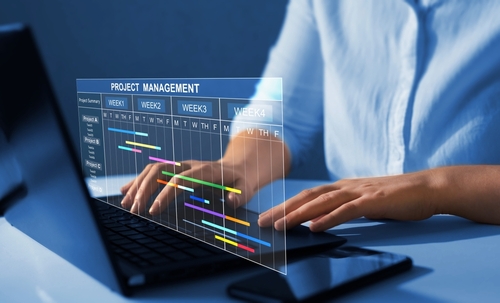
FireFlight's Trends and Forecasting Dashboard delivers two inventory intelligence indicators from live data: the Monthly Order Items Picked Trend and the Excess and Obsolete Stock Report. In 2026, environmental and industrial operations managing parts and supplies across multiple facilities need to know whether demand for specific items is growing or declining, and which inventory has stopped moving before it becomes a write-off rather than after. Both answers require trend data, not snapshots.
Trends and Forecasting Dashboard: real-time adjustments informed by demand trends and obsolescence signals

Inventory that has been sitting in a storage location for six months without a single pick is capital tied up in stock that is not serving the operation. The Excess and Obsolete Stock Report surfaces that inventory while it still has residual value to recover, rather than when a physical count at year-end turns up a write-off that has been building quietly for a year.

Schedule your free consultation

Why is a pick trend more useful than a single period's pick count?

A single period's pick count tells you how many times an item was pulled from inventory in that period. It does not tell you whether that rate is typical, increasing, or declining relative to prior periods. Replenishment decisions made against a single period's count treat every period as equally representative, which produces overstocking on items whose demand is declining and understocking on items whose demand is growing.

The Monthly Order Items Picked Trend shows how picking activity changes across consecutive periods for each item or item category. An item whose pick rate has grown steadily over six months indicates demand that the replenishment model should reflect with higher reorder quantities and lower safety stock thresholds. An item whose pick rate has declined across four consecutive months indicates softening demand that warrants a downward adjustment in reorder quantity before excess stock accumulates.

For environmental and industrial firms managing compliance parts, safety supplies, and field equipment across multiple sites, the trend view is particularly relevant because demand for specific items often follows project cycles and regulatory schedules rather than moving smoothly. An item heavily used during a remediation project that just closed will show a demand cliff in the trend data. An item needed for upcoming regulatory inspections will show accelerating demand weeks before the inspection date. Both signals are visible in the trend view and invisible in a single-period count.

The Excess and Obsolete Stock Report evaluates each inventory item against configured age and movement thresholds. Items that have not been picked within the defined window, or that are stocked above the level demand supports, surface in the report before those positions have had additional time to depreciate further.

For operations where inventory write-offs affect compliance project budgets directly, catching excess stock while it still has value to return or redeploy is a financial management function, not just a housekeeping exercise. The report provides the visibility that makes that timing possible.

Digitize and automate inventory tracking with FireFlight barcoding and trend analysis

Why excess and obsolete stock matters specifically in regulated and compliance-driven operations

Environmental consulting firms and industrial EHS operators often carry inventory that was purchased for a specific project or regulatory requirement. When that project closes or the requirement changes, the inventory remains. A compliance kit assembled for a specific regulatory standard that has since been superseded, a set of safety components for equipment that has been decommissioned, a stock of testing supplies for a monitoring program that has ended. None of these are high-value items individually, but in aggregate they represent capital and storage space that is no longer generating operational value.

PCG has been building inventory and asset management software for regulated industries since 1995. The firms that manage inventory cost most effectively are the ones whose operations teams can see which stock has stopped moving and act on it before the next budget cycle rather than discovering the accumulated write-off at year-end physical count.

How do trend data and obsolescence reporting connect to purchasing decisions?

The Monthly Order Items Picked Trend provides the demand direction input that purchasing decisions need to be accurate across multiple ordering cycles. A buyer using trend data to set reorder quantities is ordering based on where demand is going. A buyer using the most recent period's count is ordering based on where demand was. For items with meaningful lead times, the difference between those two approaches determines whether the inventory position is appropriate when the order arrives or is already misaligned with current demand.

The Excess and Obsolete Stock Report informs purchasing decisions indirectly by flagging which items should not be reordered. Before placing a replenishment order, a buyer who can see that a specific item already has months of supply on hand that is not moving can avoid adding to a position that is already excessive. Without the obsolescence report, that decision relies on someone manually checking the current on-hand quantity against recent pick history before each order, which is a process that works when it is remembered and fails when it is not.

Ikhana on-screen guide
Meet Ikhana

Your Personal Guide on Every Page

From the first click to the final step, Ikhana, your on-screen tutor, shows you how it all works. Every field, every button, every page explained with clarity, right where you need it.

In the Trends and Forecasting Dashboard, Ikhana guides inventory managers and purchasing staff through reading the pick trend chart, interpreting what demand direction means for reorder timing, and understanding which items on the Excess and Obsolete Report require immediate action versus monitoring.

Learn more about Ikhana

Dashboard Highlights

  • FireFlight Monthly Order Items Picked Trend - Picking activity tracked across consecutive monthly periods for each item or item category. Shows whether demand is growing, stable, or declining at the item level rather than presenting a single period's count without the context of whether that count is representative of current demand direction.
  • FireFlight Excess and Obsolete Stock Report - Identifies inventory items that have exceeded a configured age or have not been picked within a defined time window. Surfaces excess and obsolete positions while residual value remains rather than when a physical count confirms a write-off that has already accumulated. Thresholds configured during deployment to match your inventory management standards.
  • FireFlight Demand direction for replenishment accuracy - Trend data provides the directional input that single-period pick counts cannot. Replenishment decisions made against trend data produce inventory positions that are appropriate for where demand is heading rather than where it was during the most recent order cycle.
  • FireFlight Live data from connected inventory systems - Both indicators update automatically as picks are recorded and as inventory transactions post. The trend calculation incorporates each new period's data without a manual rebuild. The excess and obsolete thresholds evaluate current stock continuously rather than at a scheduled report run.
  • FireFlight Segmentation by location, category, or asset type - Filters configured during deployment to match your inventory structure. Understand whether demand trends or obsolescence risk are concentrated in specific facility locations, item categories, or asset classes without a manual sort before each review cycle.

What PCG has learned across 31 years of inventory management software implementations

The most consistent finding across three decades of building inventory systems for project-based and compliance-driven operations: excess and obsolete stock accumulates gradually and is discovered suddenly. A physical count or a financial audit surfaces a write-off that has been building quietly for months, often traceable to a project that closed, an equipment change that made certain parts unnecessary, or a regulatory update that shifted the compliance supply requirements. The Excess and Obsolete Stock Report addresses this by evaluating stock positions continuously against configured thresholds rather than waiting for an event that forces a review.

Pick trend analysis is the second area where PCG consistently sees inventory management benefit from a longer view than a single period provides. The operations that maintain the most accurate inventory positions are the ones whose purchasing teams make reorder decisions against demand trends rather than against the most recent pick count. A single month's pick count for a seasonal item, a project-driven item, or an item whose demand is in transition tells a very different story from the same item's six-month trend. PCG configures the trend period during deployment to reflect the demand cycle that is most relevant for each category in your specific operation.

What changes when inventory decisions are based on trend data rather than snapshots?

  • FireFlight Reorder quantities reflect demand direction rather than the most recent period's pick count, which produces more accurate inventory positions across multiple ordering cycles rather than requiring manual correction after each period where demand deviated from the prior period.
  • FireFlight Items whose demand is declining are identified in the trend data before excess stock accumulates, so reorder quantities can be adjusted downward while the current position is still appropriate rather than after overstocking has already occurred.
  • FireFlight Excess and obsolete stock is identified while residual value remains, giving the operations team the option to return, redeploy, or dispose of that inventory at better terms than a year-end write-off typically produces.
  • FireFlight Compliance project closures that change inventory demand patterns are visible in the trend data within the first post-closure period, so the replenishment model adjusts before a significant excess position develops for the items that project was consuming.
  • FireFlight Physical inventory counts produce fewer write-off surprises because the items that would generate those write-offs have already been identified and addressed through the Excess and Obsolete Stock Report during the periods when they were still recoverable.
  • FireFlight Purchasing staff spend less time manually reviewing pick histories before each replenishment decision and more time acting on the prioritized trend and obsolescence signals the dashboard surfaces automatically from live data.

Frequently Asked Questions

FireFlight What does the Trends and Forecasting Dashboard track? +
The dashboard tracks two inventory intelligence indicators from live data: Monthly Order Items Picked Trend and the Excess and Obsolete Stock Report. The Order Items Picked Trend shows how picking activity is moving across monthly periods. The Excess and Obsolete Stock Report identifies inventory that has stopped moving or is no longer aligned with current operational demand before that stock becomes a write-off.
FireFlight What is the Monthly Order Items Picked Trend and why does it matter for forecasting? +
The Monthly Order Items Picked Trend tracks how picking activity changes across monthly periods for each item or item category. Items whose pick rate is growing indicate demand that the replenishment model should reflect. Items whose pick rate is declining indicate softening demand that warrants adjustment. The trend line is more informative than a single period's pick count because it shows whether the current stock level is appropriate for where demand is heading rather than where it has been.
FireFlight What does the Excess and Obsolete Stock Report identify? +
The report identifies inventory items that have exceeded a defined age or have not been picked within a configured time window. Excess stock is inventory above current demand levels that ties up capital without generating operational value. Obsolete stock is inventory that no longer has an active use case. Both represent write-off risk if not identified and addressed while the stock still has residual value.
FireFlight How does this dashboard connect to inventory replenishment decisions? +
The Monthly Order Items Picked Trend informs reorder quantities by showing whether current demand is growing, stable, or declining for each item. Replenishment decisions made against a single period's pick count may overstock items whose demand is declining or understock items whose demand is growing. The trend view provides the directional context that makes replenishment more accurate across multiple ordering cycles.
FireFlight Can the Excess and Obsolete Report be filtered by location, category, or asset type? +
Yes. PCG configures the report filters during deployment to match your inventory classification structure. Operations managing parts across multiple facility locations can filter by site. Operations managing different categories of compliance supplies, safety equipment, and field materials can segment by category to understand where obsolescence risk is concentrated rather than seeing it as an undifferentiated list.
FireFlight Does the dashboard update automatically as inventory transactions are recorded? +
Yes. Both indicators pull from live FireFlight inventory data and update automatically as picks are recorded and as stock transactions post. The trend calculation updates with each new period's data. The excess and obsolete thresholds evaluate current stock levels against the configured parameters continuously rather than at a scheduled report run.
FireFlight How long does it take to get this dashboard configured and live? +
PCG configures FireFlight dashboards in weeks, not months. A Trends and Forecasting Dashboard deployment typically runs 6 to 10 weeks depending on the inventory data being connected, the trend calculation period being configured, and the excess and obsolete thresholds being set. The dashboard goes live against real inventory data from day one.

If your purchasing team is making reorder decisions from a single period's pick count and your excess and obsolete stock is being discovered at physical count rather than during the months when it was still recoverable, both of those problems have the same root cause: inventory decisions are being made without trend data. FireFlight's Trends and Forecasting Dashboard provides that data automatically from live inventory records. PCG deploys in weeks, not months, and Allison takes every call personally.

Schedule your free consultation

Allison Woolbert
Allison Woolbert
Principal, Phoenix Consultants Group  |  Developer, FireFlight Data Systems

PCG founded 1995. 500+ applications built across 31 years, roughly one-third in regulated environments where software failure carries direct operational and compliance consequences. FireFlight is the platform built from that body of work. When you contact PCG, Allison is the person who answers.

phxconsultants.com LinkedIn

FireFlight Data Systems is a product of Phoenix Consultants Group. PCG founded 1995. All system configurations are custom-built for each deployment. Implementation timelines, module availability, and integration scope vary by organization. Contact PCG directly to discuss requirements specific to your operation.

Trends & Forecasting Dashboard

Monitor TCO over time, incorporating acquisition cost, operational expenses, and asset depreciation to drive lifecycle planning and replacement decisions.

Procurement Dashboard | FireFlight Data Systems
Last updated: April 2026

Procurement Dashboard: Every Open Purchase Order in One View

Pending Purchase Orders from live procurement data, so procurement managers, finance teams, and budget owners all see the same current picture of committed spend that has not yet been received or invoiced.

FireFlight's Procurement Dashboard tracks Pending Purchase Orders from live procurement data. Every open PO across the organization is visible with its current status, expected delivery date, vendor, and committed value. In 2026, environmental and industrial firms managing procurement across multiple project sites and cost centers need the full pending commitment picture visible before cash flow forecasts, budget reviews, and purchasing decisions, not assembled manually from individual PO records.
Procurement Dashboard: drive purchasing decisions with location-based and project-level PO visibility

A purchase order that has been approved and issued represents committed spend. That commitment affects the budget position before the invoice arrives and affects the cash flow forecast before the payment posts. The Pending Purchase Orders view makes that committed spend visible in the planning picture while there is still time to act on it.

Schedule your free consultation

Why does pending PO visibility matter before the invoice arrives?

The gap between when a purchase order is approved and when the corresponding invoice arrives can be days, weeks, or months depending on the vendor and the goods or services being procured. During that gap, the budget position and cash flow forecast that do not account for the pending PO are both overstating the available budget and understating future cash requirements. A project that appears to have budget remaining may actually be fully committed when pending POs are counted. A cash flow forecast that shows adequate liquidity in a specific week may not reflect a significant payable that will arrive when multiple POs are fulfilled.

The Pending Purchase Orders view closes that gap by pulling every open PO from live FireFlight procurement data. Budget owners who can see the total committed but unposted spend against their budget have a more accurate picture of remaining budget than posted actuals alone provide. Finance teams who can see pending POs by expected delivery period can incorporate those commitments into the forward cash flow view rather than treating all future payables as unknown until invoice arrival.

For environmental consulting firms managing procurement across active compliance projects, and for industrial operators procuring parts and services across multiple facility sites, the number of open POs at any point in the procurement cycle can be substantial. Having that full picture current and visible without requiring someone to manually aggregate individual PO records before each review is the difference between a planning process that works at scale and one that requires more manual effort as the operation grows.

Why pending PO visibility matters in compliance-driven procurement

Environmental and industrial firms often procure compliance-related goods and services against project budgets with fixed regulatory allocations. A remediation supply order, a safety equipment purchase for a specific inspection program, a subcontractor engagement for regulatory testing. These commitments have budget implications that need to be visible before additional procurement decisions are made on the same project budget. A project manager who can see the full committed spend including pending POs before approving an additional purchase request has the information needed to make that decision accurately. Without the pending PO view, the approval may be made against a budget position that overstates availability.

PCG has been building procurement and financial management software for regulated industries since 1995. The firms that manage project budgets most consistently are the ones whose procurement and finance teams share the same view of committed spend, not separate views that diverge on the difference between posted actuals and outstanding commitments.

How does the Pending PO view connect to the full procurement and approval flow?

The Procurement Dashboard sits at the output end of the procurement flow that runs from requisition through approval through PO issuance to receipt and invoicing. The Pending Purchase Orders view shows every PO that has cleared the approval workflow and been issued but not yet fulfilled. It is the live audit of committed spend between approval and receipt, which is the window where budget overcommitment problems most commonly develop in multi-project operations.

Operations managers use it to track whether procurement for active projects is progressing on schedule. A PO that was expected to be fulfilled by a specific date and has not yet been received is visible in the pending view as an outstanding commitment rather than disappearing into an approved-but-untracked status. That visibility matters when a project timeline depends on the arrival of a specific order and the operations team needs to know whether a follow-up with the vendor is warranted.

Procurement managers use the pending PO view to manage vendor relationships and delivery expectations at the portfolio level rather than tracking individual POs separately. When a specific vendor has multiple open POs across different projects, the aggregate view makes it easier to prioritize follow-up and identify whether any single vendor relationship is creating delivery risk across the organization's active work.

Ikhana on-screen guide
Meet Ikhana

Your Personal Guide on Every Page

From the first click to the final step, Ikhana, your on-screen tutor, shows you how it all works. Every field, every button, every page explained with clarity, right where you need it.

In the Procurement Dashboard, Ikhana guides procurement managers, project leads, and finance staff through reading the Pending PO view, filtering by vendor or project, and understanding what the current committed spend picture means for budget and cash flow planning decisions.

Learn more about Ikhana

Dashboard Highlights

  • FireFlight Pending Purchase Orders - Every open PO across the organization visible with current status, expected delivery date, vendor, and committed value from live procurement data. Updates automatically when POs are issued, modified, or fulfilled. The full committed spend picture between approval and receipt without a manual aggregation step.
  • FireFlight Committed spend visibility before invoice arrival - Approved POs represent financial commitments that affect budget position and cash flow before the invoice posts. The Pending PO view incorporates that committed spend into the planning picture during the gap between PO issuance and fulfillment, which is where budget overcommitment and cash flow underestimation most commonly develop.
  • FireFlight Segmentation by vendor, project, or cost center - Pending PO filters configured during deployment to match your procurement and cost allocation structure. Understand committed spend by project, by vendor relationship, or by cost center without manually sorting a flat PO list before each budget or cash flow review.
  • FireFlight Delivery timeline visibility for operations planning - Each pending PO carries its expected delivery date, so operations managers can see which orders are tracking on schedule and which may require vendor follow-up before a project deadline is affected. The dashboard surfaces delivery risk proactively rather than when a missed delivery creates an operational gap.
  • FireFlight Shared view for procurement, finance, and operations - The same live pending PO data serves procurement managers tracking delivery, finance teams forecasting payables, and budget owners evaluating remaining commitment capacity. Shared visibility across those three functions prevents the budget and timeline miscommunications that occur when each team is working from a different version of the committed spend picture.

What PCG has learned across 31 years of procurement and financial management software implementations

The most consistent finding across three decades of building procurement systems for project-based and compliance-driven operations: the budget overrun that surprises a project manager at close almost always has a visible precursor in the pending PO record that nobody was watching. An approval made without seeing the full committed spend position, a PO issued against a budget that looked available because outstanding commitments were not counted, a cash flow forecast built without incorporating open PO obligations. Each of these is a gap between what the approval system knew and what the decision-maker saw. The Pending Purchase Orders view closes that gap by making the commitment visible at the moment decisions are being made rather than when the invoice arrives to document a commitment that is already final.

Vendor delivery tracking is the second area where pending PO visibility changes operational behavior. PCG has built procurement systems for environmental and industrial firms where specific vendor deliveries are on the critical path for regulatory deadlines. A field remediation project where safety equipment has not arrived by the scheduled mobilization date is not a procurement problem at that point: it is an operational and regulatory problem. The pending PO view surfaces the delivery risk while there is still time to expedite, source from an alternative vendor, or adjust the project schedule. That timing difference is entirely a function of whether the delivery expectation is visible before the deadline or only after it passes.

What changes when pending POs are visible before purchase decisions are finalized?

  • FireFlight Budget approvals are made against the true remaining budget including outstanding PO commitments rather than against posted actuals alone, which eliminates a category of budget overrun that occurs when approved but unposted commitments are not counted.
  • FireFlight Cash flow forecasts incorporate expected PO fulfillment dates as forward payable commitments rather than treating all future payables as unknown until the invoice arrives, which produces a more accurate forward view of cash requirements by period.
  • FireFlight Delivery risk on compliance-critical orders surfaces in the pending PO view before the expected delivery date passes, giving operations and procurement teams time to expedite or adjust project timelines rather than discovering the gap when mobilization is already scheduled.
  • FireFlight Vendor concentration risk across multiple open POs for the same vendor becomes visible at the portfolio level, so procurement leadership can identify which vendor relationships are creating the most delivery dependency before an issue with one vendor affects multiple active projects simultaneously.
  • FireFlight Procurement, finance, and operations teams work from the same current committed spend view rather than from separate systems that each show a partial picture of the organization's outstanding purchase commitments.
  • FireFlight Finance staff spend less time manually aggregating open PO values from individual procurement records before each budget review and more time acting on the current committed spend picture the dashboard provides automatically from live data.

Frequently Asked Questions

FireFlight What does the Procurement Dashboard track? +
The dashboard tracks Pending Purchase Orders from live procurement data, showing every open PO across the organization with its current status, expected delivery date, vendor, and value. For operations managing procurement across multiple cost centers or project sites, the Pending PO view gives procurement and finance leadership a current picture of committed spend that has not yet been received or invoiced.
FireFlight What is a Pending Purchase Orders view and why does it matter for cash flow? +
Pending Purchase Orders shows every approved PO that has been issued but not yet fulfilled or invoiced. For cash flow planning, this is committed spend that will generate a payable when the goods or services arrive. Finance teams that can see the full pending PO value by expected delivery period can incorporate that spend commitment into the forward cash flow view rather than treating all future payables as unknown until the invoice arrives.
FireFlight How does the Pending PO view connect to budget management? +
Pending Purchase Orders represents spend that has been approved and committed but not yet posted to the ledger. A project with a clean posted spend position but significant pending POs may already be at or near its budget limit. The dashboard surfaces that committed spend before the invoices arrive, so budget approvals are made against the true remaining budget rather than against posted actuals alone.
FireFlight Can the dashboard show pending POs by vendor, cost center, or project? +
Yes. PCG configures the Pending Purchase Orders view during deployment to match your procurement and cost allocation structure. Environmental consulting firms can filter pending POs by project or subcontractor category. Industrial operators can segment by facility, cost center, or procurement type. The view reflects how your teams actually manage open commitments rather than presenting all pending POs as a flat list.
FireFlight Does the dashboard update automatically when POs are issued or fulfilled? +
Yes. The Pending Purchase Orders view pulls from live FireFlight procurement data and updates automatically when a new PO is issued, when a PO is received and fulfilled, and when a PO is cancelled or modified. A procurement manager checking the dashboard before a purchasing decision sees the current open commitment picture, not the picture as of the last time someone ran a report.
FireFlight Who uses this dashboard: procurement, finance, or operations? +
Procurement managers use it to monitor which POs are open and whether delivery timelines are on track. Finance managers use the pending PO value by period to incorporate committed spend into cash flow forecasts before invoices arrive. Budget owners use it to understand their true remaining budget after committed but unposted spend is accounted for. Operations managers use it to track whether procurement for active projects is progressing on schedule.
FireFlight How long does it take to get this dashboard configured and live? +
PCG configures FireFlight dashboards in weeks, not months. A Procurement Dashboard deployment typically runs 6 to 10 weeks depending on the procurement workflow being connected, the cost center and project segmentation structure, and the approval workflow integration. The dashboard goes live against real procurement data from day one.

If your procurement team is managing purchase commitments from individual PO records and your finance team is building cash flow forecasts without incorporating pending spend, both teams are working from an incomplete picture of the same financial reality. FireFlight's Procurement Dashboard puts the full pending PO view on one live screen. PCG deploys in weeks, not months, and Allison takes every call personally.

Schedule your free consultation

Allison Woolbert
Allison Woolbert
Principal, Phoenix Consultants Group  |  Developer, FireFlight Data Systems

PCG founded 1995. 500+ applications built across 31 years, roughly one-third in regulated environments where software failure carries direct operational and compliance consequences. FireFlight is the platform built from that body of work. When you contact PCG, Allison is the person who answers.

phxconsultants.com LinkedIn

FireFlight Data Systems is a product of Phoenix Consultants Group. PCG founded 1995. All system configurations are custom-built for each deployment. Implementation timelines, module availability, and integration scope vary by organization. Contact PCG directly to discuss requirements specific to your operation.

Procurement Dashboard

Manage requisitions, approvals, POs, and receipts in a tightly coordinated flow.

Location-Based Inventory Dashboard | FireFlight Data Systems
Last updated: April 2026

Location-Based Inventory Dashboard: Parts Under Inspection, Visible Before They Block Work

Work Order Parts Under Inspection or Review from live inventory and work order data, so operations managers know which parts are held before those holds affect work order scheduling.

FireFlight's Location-Based Inventory Dashboard tracks Work Order Parts Under Inspection or Review from live data. Every part pulled for a work order that is currently in a hold status pending quality inspection or regulatory review is visible with its work order, location, and hold status. In 2026, environmental and industrial operations managing compliance work orders with part verification requirements need that inspection pipeline visible before scheduling decisions are made, not when a crew discovers a hold at the worksite.
Location-Based Inventory Dashboard: ensure operational readiness with work order parts inspection visibility

A work order where key parts are under inspection review is not necessarily blocked entirely. The work steps that do not require those specific parts can often continue while the inspection progresses. The operations manager who can see the inspection pipeline before the crew deploys can sequence the work accordingly. The same manager who discovers the hold when the crew is already staged has a more limited set of options.

Schedule your free consultation

Why does work order parts inspection status need its own dashboard view?

Parts allocated to a work order exist in different operational states simultaneously. Some are staged and ready for use. Others are allocated but not yet delivered to the work site. A third category, the one this dashboard addresses, is allocated and physically present but not cleared for installation because they are in an inspection or regulatory review hold. From an inventory balance perspective, these parts look the same as ready parts. From a work order execution perspective, they are not interchangeable.

The Work Order Parts Under Inspection or Review indicator separates this third category into its own view. Operations managers checking the dashboard before scheduling a work order can see immediately whether any of the required parts are in a hold status and which inspection process is holding them. That visibility changes the scheduling conversation from "can we start this work order" to "which steps of this work order can we start while the inspection on these specific parts completes."

For environmental consulting firms managing compliance work orders where part quality documentation is a regulatory requirement, and for industrial EHS operators where safety-critical part verification is a standard operating procedure, the inspection hold record is also a compliance documentation event. Each hold and clearance in the system creates an audit trail that supports both the quality record for the part and the work order documentation for the compliance activity.

Location-based inventory visibility adds a second dimension to the parts status picture. A part that is available and cleared for use at one facility may be needed at a different site where the work order is scheduled. The location component of the dashboard shows where parts physically are relative to where work orders need them, which informs both scheduling and transfer decisions.

For multi-site operations managing warehouses, field storage, and active work order staging areas across different facilities, knowing that a cleared part is at the wrong location is as operationally relevant as knowing that a part is in an inspection hold. Both affect work order scheduling. The dashboard surfaces both.

From warehouse to workflow: location-based inventory visibility with FireFlight

Why inspection hold visibility matters in regulated work order environments

Environmental and industrial EHS operations often manage work orders where the parts and materials being used carry specific quality or regulatory requirements. A replacement component for a safety system. A chemical or compound required for a remediation activity. A testing supply that must meet a specific standard for a regulatory inspection. Each of these categories has an inspection or verification requirement that is not optional and that has a documentation consequence: the inspection record becomes part of the work order file that may be reviewed during a regulatory audit.

PCG has been building work order and compliance management software for regulated industries since 1995. The firms that move through regulatory audits with the least friction on work order documentation are the ones whose inspection records are attached to the work order in the same system where the work order was managed, rather than maintained in a separate quality management record that has to be assembled before each audit.

How does location-based visibility connect to work order scheduling and parts transfer decisions?

Work order scheduling at a multi-site operation depends on knowing two things: which parts are available and cleared, and where those parts are physically located relative to the work order site. An inventory system that answers only the first question produces scheduling decisions that look correct on paper but encounter friction when execution begins because the parts are at the wrong location.

The location component of the dashboard shows parts by their physical location: warehouse bin, field storage, work order staging area, or in-transit between locations. An operations manager scheduling a work order at Site B who can see that the required cleared parts are currently staged at Site A has the information needed to arrange a transfer before the work order is scheduled to begin, rather than discovering the location mismatch on the morning of mobilization.

Parts transfer decisions also benefit from the inspection status visibility. If a part that is needed at Site B is currently in a review hold at Site A, transferring it before the inspection is complete moves a hold status part rather than a cleared part. The dashboard shows both the location and the inspection status simultaneously, so the transfer decision is made with both dimensions visible.

Ikhana on-screen guide
Meet Ikhana

Your Personal Guide on Every Page

From the first click to the final step, Ikhana, your on-screen tutor, shows you how it all works. Every field, every button, every page explained with clarity, right where you need it.

In the Location-Based Inventory Dashboard, Ikhana guides operations managers and scheduling teams through reading the work order parts inspection pipeline, understanding what a review hold means for work order sequencing, and identifying which holds require escalation to keep a compliance-deadline work order on track.

Learn more about Ikhana

Dashboard Highlights

  • FireFlight Work Order Parts Under Inspection or Review - Every part allocated to an active work order that is currently in a quality inspection or regulatory review hold status, visible with its associated work order, physical location, and hold type. Updates automatically when holds are placed and cleared. Separates inspection-held parts from staged-and-ready parts so operations managers see the distinction the inventory balance alone does not show.
  • FireFlight Location-based parts visibility - Physical location of parts shown alongside their work order allocation and inspection status. Surfaces location mismatches between where cleared parts are and where work orders need them before scheduling decisions are finalized, rather than during mobilization when the location mismatch has become a scheduling problem.
  • FireFlight Inspection hold audit trail for compliance work orders - Each inspection hold and clearance event in the system creates a timestamped record attached to the work order. For compliance work orders where part verification documentation is a regulatory requirement, the inspection record is in the same system as the work order rather than maintained separately and assembled before each audit.
  • FireFlight Multi-site and zone filtering - Inspection pipeline and location views filtered by facility, zone, or work order category during deployment to match your operational structure. Operations managers at each site see the parts status relevant to their facility rather than an undifferentiated view of all work order parts across all locations.
  • FireFlight Live data from connected work order and inventory systems - Both the inspection status and the physical location data pull from live FireFlight systems and update automatically. When an inspection is cleared, the part moves out of the review status immediately. When a part is transferred between locations, the location indicator reflects it without a manual update step.

What PCG has learned across 31 years of work order and inventory management software implementations

The most consistent finding across three decades of building work order systems for regulated operations: inspection and review holds on parts create scheduling friction that is almost always invisible to the operations manager until it affects a work order that is already in progress. The hold is placed in the quality system. The work order is managed in the operations system. The scheduling decision is made without connecting the two, because no one has built a view that shows both simultaneously. The Work Order Parts Under Inspection or Review indicator addresses that gap directly by putting the inspection pipeline in the same view as the work order allocation.

Location-based inventory visibility is the second area where multi-site operations consistently experience scheduling friction from incomplete information. PCG has built inventory and work order systems for environmental and industrial firms managing parts across multiple facilities since 1995. The scheduling conversations that go smoothest are the ones where the operations manager already knows the physical location of every required part before the work order is put on the schedule. The ones that produce last-minute scrambles are the ones where location is assumed rather than verified until mobilization morning.

What changes when work order parts inspection is visible before scheduling decisions are made?

  • FireFlight Work orders with parts in inspection holds are scheduled with the hold status accounted for, so crews are not dispatched for steps that cannot proceed until inspection is cleared.
  • FireFlight Compliance work orders with regulatory deadlines are flagged when inspection holds put those deadlines at risk, giving operations managers time to escalate the review rather than discovering the timeline conflict when the work order is already overdue.
  • FireFlight Location mismatches between cleared parts and their required work sites are identified before scheduling rather than at mobilization, so transfer arrangements are made with lead time rather than under same-day pressure.
  • FireFlight Inspection hold records are attached to work orders in the same system rather than maintained separately, which reduces the documentation assembly effort before regulatory audits that review work order quality records.
  • FireFlight Operations managers at multi-site facilities schedule from a parts status view that shows both inspection status and physical location simultaneously, rather than checking two separate systems and mentally combining the information before each scheduling decision.
  • FireFlight Inspection hold patterns across work order categories become visible over time, giving quality and procurement teams data to evaluate whether certain part categories or supplier relationships generate disproportionate inspection holds relative to the overall work order volume.

Frequently Asked Questions

FireFlight What does the Location-Based Inventory Dashboard track? +
The dashboard tracks Work Order Parts Under Inspection or Review from live inventory and work order data. It surfaces every part that has been pulled for a work order but is currently in an inspection or review hold status. For operations managing compliance work orders where part quality verification is a documentation requirement, this view keeps the inspection pipeline visible rather than requiring manual status checks across individual work order records.
FireFlight What is Work Order Parts Under Inspection or Review? +
Work Order Parts Under Inspection or Review shows every part allocated to a work order that is currently in a hold status pending quality inspection, regulatory review, or approval before it can be installed or consumed. These parts are distinct from staged-and-ready parts even though both appear as allocated in the inventory system. The hold status has a specific operational implication: the work order steps that require those parts cannot proceed until the inspection or review is cleared.
FireFlight How does this indicator connect to work order scheduling? +
A work order with parts under inspection may be partially blocked depending on which steps require those specific parts. The dashboard gives operations managers and schedulers visibility into which work orders have pending inspection holds so they can sequence work to continue steps that do not require held parts, or escalate the inspection timeline if a regulatory deadline is at risk.
FireFlight Why is location-based inventory visibility important for multi-site operations? +
Multi-site operations manage parts across warehouses, storage zones, field locations, and active work order staging areas simultaneously. A part that shows as available may be physically located at a different facility from the work order that needs it. Location-based inventory visibility shows where parts actually are relative to where they need to be, which changes both work order scheduling decisions and transfer conversations.
FireFlight Does the dashboard update automatically as inspection statuses change? +
Yes. The Work Order Parts Under Inspection or Review indicator pulls from live FireFlight data and updates automatically when inspection holds are placed and cleared. When an inspection is completed and a part is approved for use, it moves out of the review status in the dashboard immediately. When a new part is flagged for inspection on an active work order, it appears in the view without a manual step.
FireFlight Can the dashboard filter by facility, zone, or work order category? +
Yes. PCG configures the location and work order filters during deployment to match your facility structure and work order classification. Environmental and industrial firms managing work orders across multiple sites can filter the inspection hold view by facility or zone. Operations running different categories of compliance, maintenance, and project work orders can segment by work order type to understand where inspection holds are concentrated.
FireFlight How long does it take to get this dashboard configured and live? +
PCG configures FireFlight dashboards in weeks, not months. A Location-Based Inventory Dashboard deployment typically runs 6 to 10 weeks depending on the facility and zone structure being configured, the work order system being connected, and the inspection and review workflow being integrated. The dashboard goes live against real work order and inventory data from day one.

If your operations team is discovering inspection holds on work order parts at mobilization rather than at scheduling, the pipeline visibility that would change that is available from the data already in your systems. FireFlight's Location-Based Inventory Dashboard puts that inspection status and location picture on one live screen. PCG deploys in weeks, not months, and Allison takes every call personally.

Schedule your free consultation

Allison Woolbert
Allison Woolbert
Principal, Phoenix Consultants Group  |  Developer, FireFlight Data Systems

PCG founded 1995. 500+ applications built across 31 years, roughly one-third in regulated environments where software failure carries direct operational and compliance consequences. FireFlight is the platform built from that body of work. When you contact PCG, Allison is the person who answers.

phxconsultants.com LinkedIn

FireFlight Data Systems is a product of Phoenix Consultants Group. PCG founded 1995. All system configurations are custom-built for each deployment. Implementation timelines, module availability, and integration scope vary by organization. Contact PCG directly to discuss requirements specific to your operation.

Location-Based Inventory Dashboard

Create named facilities, break them into zones, and group locations under broader divisions. Apply standardized structure to every operational geography.

Auditing and Control Dashboard | FireFlight Data Systems
Last updated: April 2026

Auditing and Control Dashboard: Every Inventory Adjustment, Documented and Searchable

The Inventory Adjustment Log tracks every quantity change outside normal transactions: with timestamp, user, reason code, and value impact: so the stock record integrity is demonstrable before any audit arrives.

FireFlight's Auditing and Control Dashboard delivers the Inventory Adjustment Log from live inventory data. Every adjustment to stock quantities: cycle count reconciliation, damage write-offs, receiving discrepancies, manual corrections: is recorded in real time with the full authorization trail. In 2026, environmental and industrial operations managing compliance-critical inventory cannot wait until an audit to discover that adjustments were made without documentation. The log is built as the work happens, not assembled before the review.
Auditing and Control Dashboard: from jobsite to inventory bin, every adjustment documented in real time

An inventory adjustment log that exists only as a spreadsheet maintained by one person is a log with gaps in it. When that person is unavailable, when the spreadsheet is not updated promptly, when a correction is made in the system but not reflected in the manual record: the audit trail has a hole. The Adjustment Log in FireFlight records directly from the system transaction at the moment it occurs, without a manual documentation step.

Schedule your free consultation

Why does inventory adjustment documentation matter as much as the adjustment itself?

An inventory adjustment without documentation is indistinguishable from an unauthorized change to the stock record. Both result in the same outcome: the system shows a different quantity than it showed before. The difference is entirely in whether there is a record showing who made the change, why, when, and with what authorization. Financial auditors look at adjustment logs to verify that inventory balance changes are explained and authorized rather than the product of fraud or error that went undetected. Regulatory auditors in environmental and industrial sectors look at them to verify that the stock record for compliance-critical items reflects what was actually present and consumed.

The Inventory Adjustment Log records all of this at the transaction level. Every adjustment entry carries the user who made it, the timestamp, the reason code from the configured list, the quantity and value change, and the authorization status. For operations that require supervisor approval for adjustments above a defined threshold, the approval chain is part of the record. The log is the evidence that the inventory management process is controlled rather than ad hoc.

For environmental consulting firms managing chemical reagents, testing supplies, and field equipment with regulatory traceability requirements, and for industrial EHS operators maintaining safety-critical parts inventories, the adjustment log is not just an internal control document. It is part of the compliance record that may be reviewed when a regulatory inspection examines how the operation's inventory was managed during a specific period.

Adjustment patterns over time tell a different story from any individual adjustment entry. A location that generates a high volume of downward adjustments consistently is signaling a receiving accuracy problem, a consumption recording gap, or a physical security issue. A specific item category that appears in the adjustment log frequently may indicate a problem with how that category is being counted or tracked rather than a series of isolated incidents.

The Adjustment Log makes those patterns visible because it is searchable and filterable by location, item category, reason code, user, and date range. Inventory managers can identify the patterns that warrant process investigation rather than treating each adjustment as a discrete event without a broader context.

Real-time inventory value and adjustment tracking with FireFlight auditing controls

Why the adjustment authorization trail matters in compliance-driven inventory management

Environmental and industrial operations often manage inventory where unauthorized changes to the stock record would have direct compliance implications. A safety equipment inventory where quantities are adjusted downward without documentation could indicate unauthorized removal of required safety stock. A chemical inventory adjustment without proper reason coding and authorization could raise questions during an EPA or OSHA inspection about the chain of custody for that material. The adjustment log does not prevent unauthorized changes: access controls do that. What it does is make any change that occurs visible, attributed, and reviewable.

PCG has been building inventory and compliance management software for regulated industries since 1995. The firms that move through regulatory inventory inspections with the least friction are the ones whose adjustment records are complete, attributed, and accessible from the same system where the inventory is managed. Assembling a manual adjustment history before an inspection from emails, spreadsheets, and memory is a different experience from running a filtered adjustment report for any date range directly from the live system.

How does the adjustment log connect to cycle counting and physical inventory accuracy?

Cycle counting is the process of periodically counting a portion of inventory to verify that the system record matches physical reality. When counts find discrepancies, adjustments are made to bring the system record into alignment. The Inventory Adjustment Log records every one of those reconciliation adjustments with the count date, the item, the location, the variance found, and the correction made. Over time, the cycle count adjustment history tells the story of inventory accuracy by location and item category.

An area that requires a large reconciliation adjustment every time it is counted is an area with a persistent accuracy problem. An item that consistently counts short is an item where the consumption recording process or the physical storage practice is not working correctly. The adjustment log surfaces these patterns rather than hiding them in a long list of individual transactions. Inventory managers and operations leadership can use the pattern data to direct process improvement at the locations and items where the problem is concentrated rather than applying uniform remediation across the full inventory.

Ikhana on-screen guide
Meet Ikhana

Your Personal Guide on Every Page

From the first click to the final step, Ikhana, your on-screen tutor, shows you how it all works. Every field, every button, every page explained with clarity, right where you need it.

In the Auditing and Control Dashboard, Ikhana guides inventory managers, compliance officers, and operations staff through reading the Adjustment Log, filtering for specific date ranges and locations, interpreting adjustment patterns that signal underlying process issues, and preparing the log view for audit or inspection presentation.

Learn more about Ikhana

Dashboard Highlights

  • FireFlight Inventory Adjustment Log - Real-time record of every inventory quantity change outside normal receiving and consumption transactions. Each entry carries the user, timestamp, reason code, quantity and value change, and authorization status. The complete audit trail for the stock record, built at the moment of each transaction rather than assembled before each review.
  • FireFlight Authorization trail for every adjustment - Who made the adjustment, when, with what reason code, and whether approval was required and obtained. For operations with value-threshold or category-specific approval requirements, the authorization chain is part of the log record rather than maintained separately.
  • FireFlight Pattern visibility across locations and categories - The log is filterable and searchable by location, item category, reason code, user, and date range. Adjustment frequency patterns by area and item category surface the locations and stock types where inventory accuracy issues are concentrated, making process investigation more targeted than reviewing individual entries.
  • FireFlight Cycle count reconciliation record - Every adjustment made as a result of a cycle count discrepancy is recorded in the log with the count date and variance. The cycle count adjustment history shows inventory accuracy trends by location over time, which directs process improvement at the areas generating the most persistent discrepancies.
  • FireFlight Audit-ready from the same system where inventory is managed - The Adjustment Log is accessed and filtered directly from FireFlight without a separate export or manual assembly step. When an audit or inspection requires the adjustment history for a specific date range, location, or item category, the report runs from the live system in the time it takes to apply the filters.

What PCG has learned across 31 years of inventory auditing and control software implementations

The most consistent finding across three decades of building inventory control systems for regulated operations: the adjustment log that exists as a byproduct of the inventory system is always more complete and more accurate than the adjustment log that someone maintains manually. Manual logs have gaps that correspond to busy periods, staff turnover, and the moments when documenting an adjustment was deprioritized because the work was urgent. System-generated logs have entries for every transaction regardless of when it occurred or how busy the team was. The completeness difference between those two approaches is the difference between an audit trail that holds up and one that has to be explained.

Adjustment pattern analysis is the second area where PCG consistently sees inventory managers benefit from the log view. Individual adjustments are expected in any active inventory operation. It is the pattern behind the adjustments that indicates whether the underlying process is controlled or whether there is a systematic issue that needs attention. PCG configures the dashboard filters during deployment to make those patterns visible at the location and category level rather than buried in a chronological list of individual transactions.

What changes when every inventory adjustment is documented as it happens?

  • FireFlight Financial audits that require the inventory adjustment history for a specific period produce a complete, attributed record from the live system rather than an assembled reconstruction from emails and spreadsheets that may have gaps.
  • FireFlight Regulatory inspections that examine the stock record for compliance-critical items find a documented adjustment trail that demonstrates systematic management rather than unexplained balance changes.
  • FireFlight Inventory accuracy problems that are concentrated in specific locations or item categories become visible as patterns in the adjustment log, directing process investigation at the right area rather than treating each discrepancy as an isolated event.
  • FireFlight Unauthorized or improperly authorized adjustments are visible in the log immediately rather than discovered during the next audit cycle, giving management the ability to investigate and address control exceptions before they compound.
  • FireFlight Cycle count reconciliation history is available by location and date range, showing which areas consistently require large adjustments and which have maintained accuracy between counts, which informs decisions about counting frequency and physical security.
  • FireFlight Inventory managers spend less time preparing audit documentation before each review and more time managing the inventory, because the audit trail is being built continuously rather than requiring a documentation project before each inspection.

Frequently Asked Questions

FireFlight What does the Auditing and Control Dashboard track? +
The dashboard tracks the Inventory Adjustment Log from live inventory data. Every adjustment to inventory quantities: cycle count reconciliation, damage write-offs, receiving discrepancies, or manual corrections: is recorded with a timestamp, the user who made the adjustment, the reason code, and the quantity and value change. For regulated operations where inventory accuracy is a compliance requirement, the adjustment log is the audit trail that demonstrates the integrity of the stock record.
FireFlight What is an Inventory Adjustment Log and why does it matter for auditing? +
The Inventory Adjustment Log records every change to inventory quantities that occurs outside normal receiving and consumption transactions. For financial auditors, the log shows that inventory balance changes are authorized and documented rather than unexplained. For regulatory auditors, it demonstrates the systematic management of the stock record that compliance-driven operations are expected to maintain.
FireFlight Who has authority to make inventory adjustments, and is that tracked? +
Yes. The Inventory Adjustment Log records the user who initiated each adjustment alongside the quantity, value, reason code, and timestamp. PCG configures the adjustment authorization workflow during deployment to match your approval requirements. The log captures the full authorization trail for every adjustment, not just the outcome.
FireFlight How does the adjustment log connect to inventory accuracy and financial reporting? +
Adjustments are the mechanism that closes the gap between the system record and physical reality when discrepancies are found. The Adjustment Log shows the full history of those closures: how frequently adjustments are being made, which locations or categories generate the most adjustments, and whether adjustment volume is increasing. A high frequency in a specific area signals an underlying process problem worth investigating rather than a series of isolated events.
FireFlight Can the adjustment log be filtered by location, item category, or date range? +
Yes. PCG configures the log filters during deployment to match your audit and operational requirements. Environmental and industrial firms managing inventory across multiple sites can filter adjustments by facility. Operations managing compliance-critical and general inventory can filter by item category to review the adjustment history for their most sensitive stock separately from routine adjustments.
FireFlight Does the adjustment log update in real time as adjustments are made? +
Yes. The Inventory Adjustment Log pulls from live FireFlight inventory data and records each adjustment as it is made. When a cycle count reconciliation posts, when a damage write-off is approved, when a manual correction is entered: the log reflects it immediately. Auditors and inventory managers see the current adjustment history without a report request or a batch process.
FireFlight How long does it take to get this dashboard configured and live? +
PCG configures FireFlight dashboards in weeks, not months. An Auditing and Control Dashboard deployment typically runs 6 to 10 weeks depending on the inventory adjustment workflow being connected, the authorization and reason code structure being configured, and the audit reporting requirements being set. The dashboard goes live against real inventory data from day one.

If your inventory adjustment history is maintained in a spreadsheet that requires manual updates, the audit trail already has gaps in it. FireFlight's Auditing and Control Dashboard builds the Adjustment Log automatically from the inventory system transaction record as each adjustment occurs. PCG deploys in weeks, not months, and Allison takes every call personally.

Schedule your free consultation

Allison Woolbert
Allison Woolbert
Principal, Phoenix Consultants Group  |  Developer, FireFlight Data Systems

PCG founded 1995. 500+ applications built across 31 years, roughly one-third in regulated environments where software failure carries direct operational and compliance consequences. FireFlight is the platform built from that body of work. When you contact PCG, Allison is the person who answers.

phxconsultants.com LinkedIn

FireFlight Data Systems is a product of Phoenix Consultants Group. PCG founded 1995. All system configurations are custom-built for each deployment. Implementation timelines, module availability, and integration scope vary by organization. Contact PCG directly to discuss requirements specific to your operation.

Auditing & Control Dashboard

 Map every bin, shelf, and warehouse with precision. Maintain clean, searchable inventory records across all storage zones — and stay audit-ready at all times.

Operational Status Dashboard | FireFlight Data Systems
Last updated: April 2026

Operational Status Dashboard: Know What Is Depleted, Low, and Critical Right Now

Zero Order Quantity Depleted Stocks, Inventory Balance Restock Status, and Critical Parts Below Threshold from live inventory data: so operational gaps are visible before they stop work, not after.

FireFlight's Operational Status Dashboard tracks three inventory health indicators from live data: Zero Order Quantity Depleted Stocks, Inventory Balance Restock Status, and Critical Parts Below Threshold. In 2026, environmental and industrial operations cannot afford to discover a depleted safety supply or a missing compliance part when the crew is already on site. This dashboard surfaces those gaps the day they develop, not when someone tries to pull an item and finds nothing there.
Operational Status Dashboard: establish the foundation of your asset and inventory ecosystem with real-time stock visibility

A critical part that drops below its minimum threshold on a Tuesday afternoon needs to be visible to the procurement team on Tuesday afternoon. Not at the end of the week when someone runs a low-stock report. Not on Friday when the weekend makes expediting impossible. The Critical Parts Below Threshold alert fires when the threshold is crossed and stays visible until the situation is resolved.

Schedule your free consultation

What is the difference between depleted stock, low stock, and critical stock?

Each of the three indicators addresses a different severity level of the same underlying problem. Zero Order Quantity Depleted Stocks is the most urgent: the item is at zero on-hand balance and there is no open replenishment order. The stock is gone and nothing is coming. For any operational item, that is an uncontrolled exposure. For a compliance part or a safety supply, it is a potential regulatory or safety condition.

Inventory Balance Restock Status addresses the level below depleted: items that have not reached zero yet but are approaching their reorder point. For items with configured reorder points, the dashboard shows which have triggered replenishment and which are approaching the trigger without a procurement action in motion. The distinction between approaching-reorder-with-PO-in-progress and approaching-reorder-with-nothing-ordered is the difference between a managed situation and an unmanaged one.

Critical Parts Below Threshold is a separate indicator because not all inventory is equally consequential when it runs low. Most items can tolerate a brief stockout without immediately disrupting operations. A small subset of items cannot. Their absence stops work, creates a safety exposure, or triggers a regulatory non-compliance condition. PCG configures which items qualify as critical during deployment based on the specific operational requirements of each facility. When one of those items crosses its minimum threshold, the alert fires separately from the general low-stock view so it is not lost in a longer inventory status list.

The Restock Status indicator shows both the current balance position and the replenishment status for each item approaching its reorder point. An item at 20% of its par level with an open PO expected next week is a different situation from the same item at 20% with no replenishment in the system. Both are visible, and the distinction is what determines whether the action required is monitoring or procurement.

For multi-site operations, the dashboard filters by location so site managers see the stock status specific to their facility rather than an undifferentiated view of all inventory across all sites. A depleted part at one location may have adequate stock at another, which changes the response options available.

Organize inventory status and communication channels with FireFlight operational visibility

Why critical parts classification matters in regulated and compliance-driven operations

Environmental consulting firms and industrial EHS operators carry inventory whose absence has consequences beyond the operational inconvenience of a stockout. A personal protective equipment item required for a remediation site mobilization. A testing supply needed for a scheduled regulatory inspection. A replacement part for a safety-critical system with no acceptable substitute available on short notice. None of these are items that can be managed with the same lead time tolerance as a general supply item.

PCG has been building inventory and compliance management software for regulated industries since 1995. The firms that avoid compliance and safety inventory gaps consistently are the ones that have identified their critical items specifically and configured their stock monitoring to treat those items differently from general inventory. A generic low-stock report that lists critical and non-critical items together in a single view by quantity produces the same urgency for everything and therefore produces appropriate urgency for nothing. The Critical Parts Below Threshold indicator addresses this by configuration rather than by requiring someone to mentally sort a mixed list every time they review stock status.

How does this dashboard connect to the procurement and replenishment workflow?

The Operational Status Dashboard sits at the front end of the replenishment trigger. When a depleted stock appears in the Zero Order Quantity view with no open PO, that is the signal for procurement to act. When an item appears in the Restock Status view approaching its reorder point without a replenishment in motion, that is the signal for procurement to initiate one before the item reaches zero. When a critical part crosses below threshold, that is the signal for expedited action rather than routine replenishment.

The dashboard does not make those decisions automatically. It surfaces the information that makes those decisions possible at the right time. An operations manager who sees a critical part threshold alert first thing in the morning can initiate an expedited order or arrange a cross-site transfer before the day's scheduled work requires that part. The same situation discovered when a crew is already staged for deployment is a different problem with a narrower set of responses.

Ikhana on-screen guide
Meet Ikhana

Your Personal Guide on Every Page

From the first click to the final step, Ikhana, your on-screen tutor, shows you how it all works. Every field, every button, every page explained with clarity, right where you need it.

In the Operational Status Dashboard, Ikhana guides operations managers, site leads, and procurement staff through reading the depleted stock list, interpreting restock status for approaching-threshold items, and understanding what a critical parts alert requires in terms of response priority and timeline.

Learn more about Ikhana

Dashboard Highlights

  • FireFlight Zero Order Quantity Depleted Stocks - Items at zero on-hand balance with no open replenishment order in the system, identified from live inventory data. The most urgent stock status category: the item is gone and nothing is ordered to replace it. Updates automatically when stock is received or a PO is placed.
  • FireFlight Inventory Balance Restock Status - Items approaching their reorder point with their current replenishment status shown alongside the balance position. Distinguishes between items with a PO in progress and items approaching the threshold with no procurement action initiated, so operations and procurement teams can see which situations are managed and which require immediate attention.
  • FireFlight Critical Parts Below Threshold - A dedicated alert for the subset of items whose stockout would cause an immediate operational, safety, or compliance disruption. Configured during deployment to match your specific critical item list. Fires separately from the general low-stock view so critical situations are not mixed with routine restock items in the same review list.
  • FireFlight Live data from connected inventory systems - All three indicators update automatically as picks are recorded, as stock is received, and as inventory adjustments post. A critical part that drops below threshold appears in the alert immediately. A depleted item that receives a replenishment order moves out of the Zero Order Quantity view the moment the PO is placed.
  • FireFlight Site and category segmentation - Dashboard filters configured during deployment to match your inventory and facility structure. Multi-site operations see stock status by location. Operations managing compliance supplies, safety equipment, and field materials in separate categories can filter by category to understand where operational risk is concentrated by type of inventory.

What PCG has learned across 31 years of inventory and operations management software implementations

The most consistent finding across three decades of building inventory systems for regulated operations: the operational disruptions that trace back to stockouts almost always have a visible precursor. The item was approaching zero for days before it reached zero. The threshold was crossed on a Tuesday and discovered on a Thursday when the crew arrived at the site. The depleted position had no open PO because the replenishment trigger was not being watched continuously. The Operational Status Dashboard addresses all three of those gaps by presenting the stock status picture in real time rather than at a scheduled review interval.

Critical parts classification is the configuration step that PCG invests the most time in during deployment because it is the step that determines how useful the dashboard actually is. An undifferentiated list of all low-stock items produces the same visual urgency for everything, which means it effectively communicates urgency for nothing. The firms whose operations teams respond fastest and most appropriately to stock alerts are the ones whose critical item list is specific, current, and reflected in a dedicated dashboard indicator rather than buried in a general inventory status report.

What changes when depleted and critical stock is visible the day it happens?

  • FireFlight Zero-balance items with no replenishment order are identified the day they reach zero rather than when someone tries to pull the item and finds nothing there, which changes the response from reactive sourcing to proactive procurement.
  • FireFlight Critical parts threshold alerts reach the operations and procurement team on the day the threshold is crossed, when expedited replenishment or cross-site transfer is still a planning option rather than an emergency response.
  • FireFlight Items approaching reorder with no procurement action in motion are visible in the Restock Status view before they reach zero, giving procurement time to initiate a standard replenishment rather than an expedited one.
  • FireFlight Compliance and safety inventory gaps are identified before a scheduled site activity depends on the missing item, which changes the situation from a regulatory or safety exposure to a managed procurement gap with time to resolve.
  • FireFlight Operations managers at multi-site facilities see the stock status specific to their location rather than an undifferentiated view of all inventory across all sites, so site-level decisions are made with site-relevant information.
  • FireFlight Procurement staff spend less time manually checking stock levels before each replenishment cycle and more time responding to the specific depleted, low, and critical alerts the dashboard surfaces automatically from live inventory data.

Frequently Asked Questions

FireFlight What does the Operational Status Dashboard track? +
The dashboard tracks three inventory health indicators from live data: Zero Order Quantity Depleted Stocks, Inventory Balance Restock Status, and Critical Parts Below Threshold. Together they give operations teams a current picture of which stock positions have been exhausted, which are approaching reorder points, and which critical parts are below the minimum level required to support active operations without interruption.
FireFlight What is Zero Order Quantity Depleted Stocks? +
Zero Order Quantity Depleted Stocks identifies inventory items that have reached a zero on-hand balance with no open replenishment order in place. These are the positions most immediately at risk of creating an operational gap: the stock is gone and nothing has been ordered to replace it. For operations managing compliance parts and safety supplies, a depleted stock with no reorder is an uncontrolled exposure that needs to be surfaced and acted on the day it occurs.
FireFlight What does Inventory Balance Restock Status show? +
Inventory Balance Restock Status shows which items are approaching their reorder points and what their current replenishment status is. For items with a reorder triggered, it shows where the replenishment is in the procurement process. For items approaching the reorder point without a replenishment in motion, it flags them for action. The combined view of balance position and replenishment status lets teams see which situations are managed and which require immediate attention.
FireFlight What are Critical Parts Below Threshold and why do they get a separate indicator? +
Critical Parts Below Threshold is a dedicated alert for the subset of inventory items whose stockout would cause an immediate operational or compliance disruption. These are not just low-stock items: they are items whose absence stops work or triggers a safety or regulatory condition. PCG configures which items qualify as critical during deployment. When a critical part crosses below its minimum threshold, the alert fires immediately rather than appearing in a general low-stock review.
FireFlight Does the dashboard update automatically as inventory transactions are recorded? +
Yes. All three indicators pull from live FireFlight inventory data and update automatically when picks are recorded, when stock is received, and when inventory adjustments are made. When a depleted item receives a replenishment order, it moves out of the Zero Order Quantity alert. When a critical part drops below threshold, the alert fires immediately. Operations teams see the current stock position without a report request or a manual check.
FireFlight Can the dashboard filter by location, category, or project? +
Yes. PCG configures the dashboard filters during deployment to match your inventory structure. Environmental and industrial firms managing parts across multiple facility locations can filter depleted stocks and threshold alerts by site. Operations managing different categories of compliance supplies, safety equipment, and field materials can segment by category to understand where operational stock risk is concentrated.
FireFlight How long does it take to get this dashboard configured and live? +
PCG configures FireFlight dashboards in weeks, not months. An Operational Status Dashboard deployment typically runs 6 to 10 weeks depending on the inventory data being connected, the critical parts classification being configured, and the reorder threshold parameters being set. The dashboard goes live against real inventory data from day one.

If your operations team is discovering depleted compliance parts and critical stock gaps when someone tries to pull an item rather than the morning before it matters, the monitoring system is arriving too late to change the outcome. FireFlight's Operational Status Dashboard surfaces those gaps the day they develop. PCG deploys in weeks, not months, and Allison takes every call personally.

Schedule your free consultation

Allison Woolbert
Allison Woolbert
Principal, Phoenix Consultants Group  |  Developer, FireFlight Data Systems

PCG founded 1995. 500+ applications built across 31 years, roughly one-third in regulated environments where software failure carries direct operational and compliance consequences. FireFlight is the platform built from that body of work. When you contact PCG, Allison is the person who answers.

phxconsultants.com LinkedIn

FireFlight Data Systems is a product of Phoenix Consultants Group. PCG founded 1995. All system configurations are custom-built for each deployment. Implementation timelines, module availability, and integration scope vary by organization. Contact PCG directly to discuss requirements specific to your operation.

Operational Status Dashboard

Ensure compliance, security, and data integrity with every transaction logged.

Inventory and Stock Dashboard | FireFlight Data Systems
Last updated: April 2026

Inventory and Stock Dashboard: 10 Live Indicators Across the Full Stock Picture

Stock by status, SKU tracking, shelf location, transfer pipeline, top work order parts, vendor lead times, consumption rate, and total stock value: all from live inventory data on one screen.

FireFlight's Inventory and Stock Dashboard tracks 10 indicators from live data covering every dimension of the current stock position: what is on hand, where it is, how it is being used, how fast it is being consumed, and where procurement attention is needed. In 2026, environmental and industrial operations managing parts across multiple locations and work order types need a complete inventory picture in one view rather than assembled from separate reports before each planning conversation.
Inventory and Stock Dashboard: track inventory with confidence across every location, SKU, and status

An inventory system that shows total on-hand balance without showing status, location, consumption rate, and lead time is answering only one of the five questions inventory managers need answered before a planning decision. This dashboard answers all five from the same live data source without requiring a separate report for each.

Schedule your free consultation

What do 10 inventory indicators give you that a balance report does not?

A balance report answers one question: how many units of each item are on hand. The Inventory and Stock Dashboard answers nine additional questions simultaneously. Where is that stock physically located by shelf and zone. What is the status of each stock position: available, allocated, in receiving, or on hold. How fast is each item being consumed across active work orders. Which items have vendor lead times long enough to create a replenishment gap at current consumption rates. What is the total monetary value of the current stock position. Which items are being transferred between locations and where those transfers stand in the pipeline.

Each of those questions maps to a specific operational or financial decision. Status distinguishes available stock from committed stock. Location determines whether a part is accessible for a scheduled work order or requires transfer. Consumption rate and lead time together determine actual days of supply remaining, which is the number that matters for replenishment timing. Total Stock Value is the financial exposure in the inventory position. The transfer pipeline shows which inter-facility movements are in progress and whether any requests are pending that affect the availability picture at specific locations.

The Top 10 Most Used Parts in Work Orders indicator is the connection between the inventory picture and the work order activity that is consuming it. Knowing which items are being used most frequently across active work orders is the starting point for safety stock calibration. An item in the top 10 that is also showing a large vendor lead time and a consumption rate approaching its current on-hand balance is exactly the combination that warrants a procurement conversation before it becomes a stockout.

SKU Tracking and Shelf Location indicators serve different functions in the same inventory accuracy picture. SKU Tracking monitors items at the individual stock unit level, which matters for serialized parts or items with lot or batch traceability requirements. Shelf Location shows where each item is physically stored by bin, rack, or zone within a facility.

For compliance and safety-critical inventory where traceability is a documentation requirement, the SKU-level tracking record provides the audit trail that a balance-only view cannot. For multi-zone facilities where locating a specific part requires knowing which of several storage areas it is in, the shelf location indicator removes the search time.

Track inventory with confidence: SKU tracking and shelf location visibility with FireFlight

Why vendor lead time visibility matters in compliance-driven operations

Environmental and industrial EHS operations carry inventory items whose replenishment depends on suppliers with variable delivery windows. A standard safety supply item with a 2-day lead time can be replenished quickly when stock runs low. A specialized compliance part or a proprietary replacement component with a 6-week lead time cannot. The Inventory Large Vendor Lead Times indicator flags items whose supplier delivery window exceeds the configured threshold, which surfaces the items where a stockout carries the longest recovery time.

PCG has been building inventory and compliance management software for regulated industries since 1995. The firms that avoid compliance-critical stockouts consistently are the ones that maintain higher safety stock on long-lead items rather than managing all inventory with the same reorder parameters. That differentiation requires knowing which items carry large lead times, which is exactly what this indicator provides from live supplier data.

How do Average Consumption Rate and Total Stock Value connect to inventory financial management?

Average Consumption Rate calculates how fast each item is being used across work orders over a rolling period. This is the denominator in the days-of-supply calculation: current on-hand balance divided by daily consumption rate equals days of supply remaining. Without the consumption rate, the on-hand balance is a number without operational context. An item with 200 units on hand that is consumed at 50 units per week has 4 weeks of supply. The same 200 units consumed at 5 units per week has 40 weeks. Those two situations require completely different replenishment responses.

Total Stock Value provides the financial picture alongside the operational one. For operations where inventory is a significant balance sheet item, knowing the current total value of stock on hand is relevant to period-end financial reporting, to insurance and risk management, and to understanding the financial consequence of a loss or write-off event. The indicator shows the aggregate value of the current stock position from live pricing and quantity data without requiring a separate inventory valuation report.

Inventory Summary Usage pulls together the consumption picture at a broader level, showing usage patterns across item categories, work order types, or facility locations depending on the segmentation configured during deployment. Where Consumption Rate addresses individual items, Summary Usage addresses the portfolio question: which categories of inventory are driving the most activity and whether that activity is trending up or down.

Ikhana on-screen guide
Meet Ikhana

Your Personal Guide on Every Page

From the first click to the final step, Ikhana, your on-screen tutor, shows you how it all works. Every field, every button, every page explained with clarity, right where you need it.

In the Inventory and Stock Dashboard, Ikhana guides inventory managers, procurement staff, and operations planners through reading each indicator, understanding how consumption rate and lead time together determine replenishment urgency, and interpreting the transfer pipeline indicators for multi-site stock movement decisions.

Learn more about Ikhana

All 10 indicators: what each one shows

  • FireFlight Inventory Stock by Status - Current stock position organized by status category: available, allocated to work orders, in receiving, in inspection, on hold, or damaged. Distinguishes ready-for-use stock from committed or restricted stock so planning decisions are based on what is actually available rather than total on-hand balance alone.
  • FireFlight Inventory Stock SKU Tracking - Individual stock unit tracking for serialized or lot-traced items. Provides the item-level traceability record needed for compliance and safety-critical parts where the audit trail requires more than a quantity balance. Updates automatically as items are received, moved, consumed, or adjusted.
  • FireFlight Inventory Stock by Shelf Location - Current stock organized by physical storage location within each facility: bin, rack, zone, or storage area. Removes the search time for specific items in multi-zone facilities and provides the location accuracy needed for pick and put-away operations.
  • FireFlight Inventory Transfers New Requests by Location - Pending transfer requests organized by the requesting location. Shows which facilities are waiting for stock movements from other sites and the volume and priority of those requests, so transfer fulfillment can be prioritized against the most urgent operational needs.
  • FireFlight Inventory Transfer by Location and Status - All active inter-facility transfers with current status: requested, approved, in transit, or received. Tracks the full movement pipeline across all locations so inventory managers can see where stock is in transit and whether any transfers are delayed or require follow-up.
  • FireFlight Top 10 Most Used Parts in Work Orders - The ten items consumed most frequently across active and recently completed work orders, updated from live work order data. The starting point for safety stock calibration: high-consumption items whose lead times are also long deserve the most attention in the replenishment review.
  • FireFlight Inventory Large Vendor Lead Times - Items whose supplier delivery lead time exceeds a configured threshold, flagging the stock positions where replenishment takes longest relative to the available time to reorder. For compliance and safety-critical parts, these are the items whose safety stock levels require the most careful management.
  • FireFlight Inventory Summary Usage - Aggregate consumption patterns across item categories, work order types, or facility locations depending on configured segmentation. Shows which categories are driving the most inventory activity and whether usage in specific categories is trending up or down.
  • FireFlight Total Stock Value - Current aggregate monetary value of the full inventory position from live pricing and quantity data. Relevant for period-end financial reporting, insurance and risk management, and understanding the financial consequence of write-off events. Updates automatically as stock is received, consumed, or adjusted.
  • FireFlight Average Consumption Rate - How fast each item is being consumed across work orders over a rolling period. The denominator in the days-of-supply calculation that tells operations managers whether current stock levels are adequate for upcoming work order activity at the actual rate of use rather than at a static reorder point assumption.

What PCG has learned across 31 years of inventory management software implementations

The most consistent finding across three decades of building inventory systems for project-based and regulated operations: the inventory decisions that produce stockouts and excess stock almost always share the same root cause. The planning was done with a balance number rather than with the combination of balance, status, consumption rate, and lead time that the decision actually requires. A balance number that looks adequate may represent fully committed stock. A balance that looks comfortable at current consumption rates may be inadequate at the consumption rate that next month's work order schedule will produce. The Inventory and Stock Dashboard addresses this by putting all four dimensions on the same screen rather than requiring separate reports to assemble the complete picture.

The transfer pipeline indicators address a gap that PCG sees consistently in multi-site operations. Stock transfers between facilities are managed through the procurement or operations workflow but are rarely visible in the inventory dashboard until the receiving location confirms receipt. The result is that a facility manager waiting for a transfer does not know whether it has been approved, is in transit, or has been delayed until someone checks manually. Inventory Transfer by Location and Status brings the entire movement pipeline into the inventory view so both the sending and receiving facilities see the same current status without a phone call.

What changes when 10 inventory indicators are visible from one live data source?

  • FireFlight Planning decisions are made against available stock rather than total on-hand balance, so committed and restricted inventory is not counted as available capacity for new work order allocations.
  • FireFlight Replenishment urgency is evaluated against the combination of current balance, consumption rate, and vendor lead time rather than against a static reorder point, which produces more accurate timing across different item consumption profiles.
  • FireFlight High-consumption items with long lead times are identified as the combination most likely to produce a stockout, so safety stock levels for those specific items can be calibrated appropriately rather than uniformly.
  • FireFlight Inter-facility transfer pipeline is visible to both sending and receiving locations from live data, so transfer status questions are answered from the dashboard rather than through manual follow-up between facility teams.
  • FireFlight Total Stock Value updates automatically from live quantity and pricing data, so period-end inventory valuation is a current figure rather than a calculation that requires a manual count reconciliation before it can be presented.
  • FireFlight Inventory managers spend less time assembling a current stock picture from multiple reports before each planning cycle and more time acting on the complete picture the dashboard provides automatically from live data.

Frequently Asked Questions

FireFlight What does the Inventory and Stock Dashboard track? +
The dashboard tracks 10 inventory indicators from live data: Inventory Stock by Status, Inventory Stock SKU Tracking, Inventory Stock by Shelf Location, Inventory Transfers New Requests by Location, Inventory Transfer by Location and Status, Top 10 Most Used Parts in Work Orders, Inventory Large Vendor Lead Times, Inventory Summary Usage, Total Stock Value, and Average Consumption Rate. Together they give a complete current picture of what is in stock, where it is, how fast it is being consumed, and where procurement attention is needed.
FireFlight What does Inventory Stock by Status show? +
Inventory Stock by Status organizes the current stock position by status category: available, allocated to work orders, in receiving, in inspection, on hold, or damaged. Total on-hand balance alone does not tell a planner whether a part is available for a new work order or already committed to an active one. The status breakdown makes that distinction visible from live inventory data.
FireFlight What are Inventory Large Vendor Lead Times and why do they get their own indicator? +
Inventory Large Vendor Lead Times flags items whose supplier has a delivery lead time that exceeds a configured threshold. For operations managing compliance parts or safety supplies, a long lead time means a structural gap between a reorder trigger and available stock if safety stock is not calibrated accordingly. Knowing which items carry large lead times allows safety stock levels to be set appropriately for those specific items rather than uniformly across all inventory.
FireFlight What is Average Consumption Rate and how does it connect to replenishment? +
Average Consumption Rate calculates how fast each item is being consumed across work orders over a rolling period. Combined with Total Stock Value and the large vendor lead time indicator, it gives inventory managers the numbers needed to evaluate whether the current stock position is adequate: how much is on hand, how fast it is being consumed, and how long replenishment takes. These together determine actual days of supply remaining, which is more operationally useful than a static reorder point alone.
FireFlight What does the Inventory Transfers view show? +
The dashboard includes two transfer indicators. Inventory Transfers New Requests by Location shows pending transfer requests organized by the requesting location. Inventory Transfer by Location and Status shows all active transfers with their current status from requested through received. Both views together give inventory managers the information needed to prioritize transfer fulfillment and track open movements without manual follow-up between facilities.
FireFlight What is Top 10 Most Used Parts in Work Orders? +
Top 10 Most Used Parts in Work Orders shows which items are being consumed most frequently across active and recently completed work orders. These are the items whose stockout would affect the most work orders and whose safety stock levels deserve the most attention. The indicator updates from live work order data rather than from historical reports, so it reflects current work order activity.
FireFlight How long does it take to get this dashboard configured and live? +
PCG configures FireFlight dashboards in weeks, not months. An Inventory and Stock Dashboard deployment typically runs 6 to 10 weeks depending on the inventory data being connected, the SKU and location structure, lead time threshold configuration, and the work order system integration. The dashboard goes live against real inventory data from day one.

If your inventory planning is being done from a balance report alone, nine of the ten questions this dashboard answers are being left unanswered before each planning decision. FireFlight's Inventory and Stock Dashboard puts all 10 indicators on one screen from live data. PCG deploys in weeks, not months, and Allison takes every call personally.

Schedule your free consultation

Allison Woolbert
Allison Woolbert
Principal, Phoenix Consultants Group  |  Developer, FireFlight Data Systems

PCG founded 1995. 500+ applications built across 31 years, roughly one-third in regulated environments where software failure carries direct operational and compliance consequences. FireFlight is the platform built from that body of work. When you contact PCG, Allison is the person who answers.

phxconsultants.com LinkedIn

FireFlight Data Systems is a product of Phoenix Consultants Group. PCG founded 1995. All system configurations are custom-built for each deployment. Implementation timelines, module availability, and integration scope vary by organization. Contact PCG directly to discuss requirements specific to your operation.

Inventory and Stock Dashboard

Reconcile. Adjust. Move forward.
Perform inventory validations quickly while preserving accuracy and transparency across all involved departments.