AI Integration Workspace: Embed Intelligence Into Every Workflow
Deploy AI capabilities directly into your inspections, asset records, vendor interactions, and compliance workflows. Anthropic Claude, OpenAI GPT-4, Google Gemini, and Ollama, configured for your specific operation, with a full audit trail on every AI-assisted decision.
In 2026, the operations still treating AI as something to evaluate later are already behind the ones that deployed it six months ago. That gap does not close on its own. FireFlight's AI Integration workspace is how PCG deploys AI directly into the workflows where it produces measurable results: document parsing, inspection flagging, predictive triggers, and natural language reporting against live data. The first conversation is free. Most integrations complete in weeks, not months.
Schedule your free consultationWhich AI providers does FireFlight integrate with, and how do you choose?
FireFlight integrates with four AI providers: Anthropic Claude, OpenAI GPT-4, Google Gemini, and Ollama. PCG evaluates which provider fits your specific workflows, data sensitivity requirements, and existing infrastructure before any integration begins. These are not equivalent options. Each has different strengths for different use cases, and PCG's job is to match the right one to your operation rather than default to whatever is most familiar.
Ollama deserves a specific explanation because it works differently from the cloud providers. It runs entirely on your own hardware, with zero external data transmission. Nothing leaves your building. For operations in regulated industries, operations handling confidential client records, or any organization with a policy against sending operational data to third-party servers, Ollama provides full AI capability with full data sovereignty. PCG configures and supports Ollama deployments alongside the cloud provider options.
Third-party SaaS platforms are evaluated case by case. Some allow external AI integration and some restrict it at the platform level. PCG will assess your specific platforms before making any commitment rather than promising a broad capability that may not hold for your particular stack.
How does AI integration address the security exposure in older systems?
Platforms that have reached the end of their development runway carry serious security concerns that are often underestimated until something goes wrong. Outdated encryption standards. No audit trails on data access. Access controls that were never designed for the number of people now using the system. PCG has seen these produce real compliance failures and data exposure events in operations that assumed their older systems were adequate.
Integrating AI from providers like Anthropic Claude or OpenAI GPT-4 adds an authenticated, monitored layer on top of that older infrastructure. Every AI-assisted action carries a timestamp, a user attribution, and a logged output. That audit layer reduces security exposure significantly and creates the documentation trail that compliance reviews and insurance audits require. The integration does not just add capability. It adds accountability to workflows that previously had none.
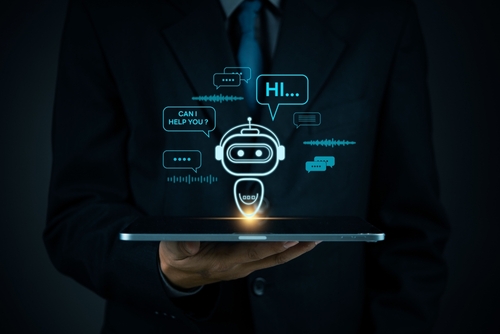
AI does not add value sitting in isolation from the workflows your team uses every day. FireFlight embeds AI capabilities directly into the modules where the work happens: inspections, asset logs, vendor records, compliance checklists, and reporting. The AI suggestion appears at the point in the workflow where it changes a decision, not in a separate dashboard that someone has to remember to check.
Most integrations complete in weeks, not months. PCG handles provider configuration, workflow mapping, feedback loop setup, and testing against your actual operational data before go-live.
What apps are included in the AI Integration workspace?


What enterprise systems does this workspace integrate with?
 Product Lifecycle Management
 ERP
ERP
 Enterprise Asset Management
 Supply Chain Management
 CRM
CRM
 Inventory Management System
AI is mission critical in 2026, not because of hype, but because of the gap it creates: Operations that deployed AI into their inspection, reporting, and compliance workflows are processing the same volume of work with fewer errors and in less time than they were 18 months ago. Operations that are still evaluating are running the same volume with the same headcount and the same error rate. That gap does not close on its own.
PCG's position on AI integration is direct: the question is not whether to integrate, but which workflows to start with and which provider fits the security requirements of your specific operation. Anthropic Claude, OpenAI GPT-4, and Google Gemini all require data to leave your infrastructure. Ollama does not. For operations where data sovereignty is non-negotiable, Ollama is the answer. PCG has been building software systems that handle sensitive operational and compliance data since 1995. The security conversation happens before the integration proposal, not after.
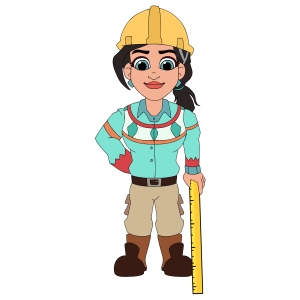
Your Personal Guide on Every Page
From the first click to the final step, Ikhana, your on-screen tutor, shows you how it all works. Every field, every button, every page explained with clarity, right where you need it.
In the AI Integration workspace, Ikhana guides users through AI-assisted workflows, explains how to interpret AI-suggested outputs, and walks teams through the feedback loop that improves model performance over time. Staff who have never worked with AI-assisted tools are productive from their first day with the system.
Learn more about IkhanaWhat does the AI Integration workspace actually do?
-
 Central hub for deploying AI system-wide: AI capabilities configured once and deployed into any module across your FireFlight system. Inspections, asset logs, vendor interactions, compliance checklists, and reporting all become AI-assisted without requiring a separate integration for each one.
-
Four supported AI providers, each with distinct strengths: Anthropic Claude, OpenAI GPT-4, Google Gemini, and Ollama. Cloud providers offer the most capable models for document parsing, classification, and natural language reporting. Ollama runs on-premises with zero external data transmission for operations where full data sovereignty is required.
-
Document parsing, suggestion engines, and prediction workflows: AI reads documents, extracts structured data, flags anomalies, suggests next actions, and triggers workflow events based on what it finds. These capabilities deploy into existing FireFlight modules without rebuilding workflows from scratch.
-
Notes, comments, and history to track AI usage and outcomes: Every AI-suggested output is logged alongside the user decision that followed. That feedback loop is what allows model performance to improve over time and gives compliance teams a traceable record of every AI-assisted decision made in the system.
-
Custom dashboards and reports on AI usage: Monitor which workflows are using AI, how often suggestions are accepted or overridden, and where model performance needs adjustment. Usage data accumulates from the first day of operation and informs every subsequent improvement.
-
Designed to evolve as models improve: When Anthropic, OpenAI, or Google release model updates, the FireFlight integration layer updates without requiring a new deployment. Ollama deployments update on your own schedule, on your own hardware, with no external dependency.
What PCG learned integrating AI into operational systems across 31 years of custom software development: The integrations that produce the fastest measurable return are not the ones that automate the most complex tasks. They are the ones that eliminate small repeated manual steps that consume the most cumulative time: reading a document and extracting three fields, scanning a record and flagging an anomaly, querying a database and formatting the result for a report.
Those tasks take 30 seconds each. Done 50 times a day, they add up to hours per week per person. AI handles them in under a second with consistent accuracy. PCG's free consultation identifies exactly which of those tasks exist in your specific operation and which AI provider handles them most effectively given your data sensitivity requirements. Most integrations are live and returning value in 2 to 4 weeks.
"We have integrated AI into five of our core workflows, from routing to flagging, and it has made everything faster, more accurate, and more proactive than it was before."Jordan AyalaSystems Architect, smart infrastructure and data operations firm
What changes after deploying AI integration in FireFlight?
-
Repetitive manual tasks that consumed staff time daily are handled by AI in under a second, at consistent accuracy, with a logged output for every action. The time savings are measurable from the first week of operation.
-
Document parsing that previously required a person to read, extract, and enter data runs automatically when a document is ingested. Classification errors from manual entry drop immediately after go-live.
-
Inspection and compliance workflows flag anomalies at the point of data entry rather than during a later review. Issues that previously took days to surface are visible in real time.
-
Natural language reporting against live operational data means a compliance officer or operations manager can query their own database in plain English and get an immediate answer, without waiting for IT to build a report or export data to a spreadsheet.
-
Every AI-assisted action carries an audit trail from day one. Compliance reviews, insurance audits, and regulatory documentation requests are answered from the system record rather than reconstructed from memory and partial logs.
Questions about FireFlight AI Integration
Which AI providers does FireFlight integrate with?
Which AI providers does FireFlight integrate with?
How long does an AI integration take to deploy in FireFlight?
How long does an AI integration take to deploy in FireFlight?
Can FireFlight integrate AI with third-party SaaS platforms we already use?
Can FireFlight integrate AI with third-party SaaS platforms we already use?
What is Ollama and why would an operation choose it over cloud AI providers?
What is Ollama and why would an operation choose it over cloud AI providers?
Does AI integration work with older or legacy systems in FireFlight?
Does AI integration work with older or legacy systems in FireFlight?
How does FireFlight track AI-suggested outputs and user decisions?
How does FireFlight track AI-suggested outputs and user decisions?
What workflows benefit most from AI integration in FireFlight?
What workflows benefit most from AI integration in FireFlight?
AI integration is mission critical in 2026. The operations that deployed it last year are already ahead on accuracy, speed, and compliance documentation. The first step with PCG is a free 30-minute consultation to identify which workflows in your operation produce the fastest return. Most integrations are live in 2 to 4 weeks. Nothing leaves your building if you choose Ollama. The conversation is free.
Schedule your free consultation
FireFlight Data Systems is a product of Phoenix Consultants Group. PCG founded 1995. All system configurations are custom-built for each deployment. Implementation timelines, module availability, and integration scope vary by organization. AI provider availability and data handling terms are governed by each respective provider. Contact PCG directly to discuss requirements specific to your operation.