
FireFlight for Manufacturing: One System for the Whole Floor
Run production, inventory, work orders, and job costing on one platform. BOMs update everywhere at once. MRP fires before a shortage reaches kitting. Job costing you can see in real time. Built for teams of 20 to 500 employees. Live in weeks, not months.
Why does production drift from the plan?
In a growing plant, engineering rebuilds a BOM by hand for every configured order, a shortage surfaces at kitting, the whiteboard schedule reflects hope more than reality, and no one can see profit by product line. Each gap costs hours, material, and margin.
The root cause is not effort. The work lives in separate tools that never talk to each other, so a change in one place never reaches the next. The fix is a single system where the quote, the BOM, inventory, the schedule, and the invoice share the same data. That is the FireFlight operational platform.
What does FireFlight run on the plant floor?
FireFlight is assembled from modules that map to how a plant actually works, from the quote through routing to job costing. Each one shares the same data, so a change in engineering reaches inventory, the schedule, and the invoice without a re-entry step.
 Product and Component Templates: Full BOM, routing, and costing per product. Shared subassemblies live as reusable components, so one engineering change reaches every product that uses it.
- MRP-Driven Inventory: Material requirements calculated from confirmed orders and schedules across every product, so procurement fires before a shortage reaches kitting.
- Digital Work-Center Routing: Each product routes through cutting, machining, welding, assembly, and QA, with instructions driven by real material and capacity.
- Serialization and QA: Motors, drive components, and critical parts get serialized and tied to QA events, so a field issue traces back in minutes.
- Parameter-Driven Quoting: Sales generates accurate cost and lead time from the customer configuration, without waiting on engineering.
- Template-Driven Job Costing: Actual labor and material attach to every job as it runs, so profit by product line becomes visible.
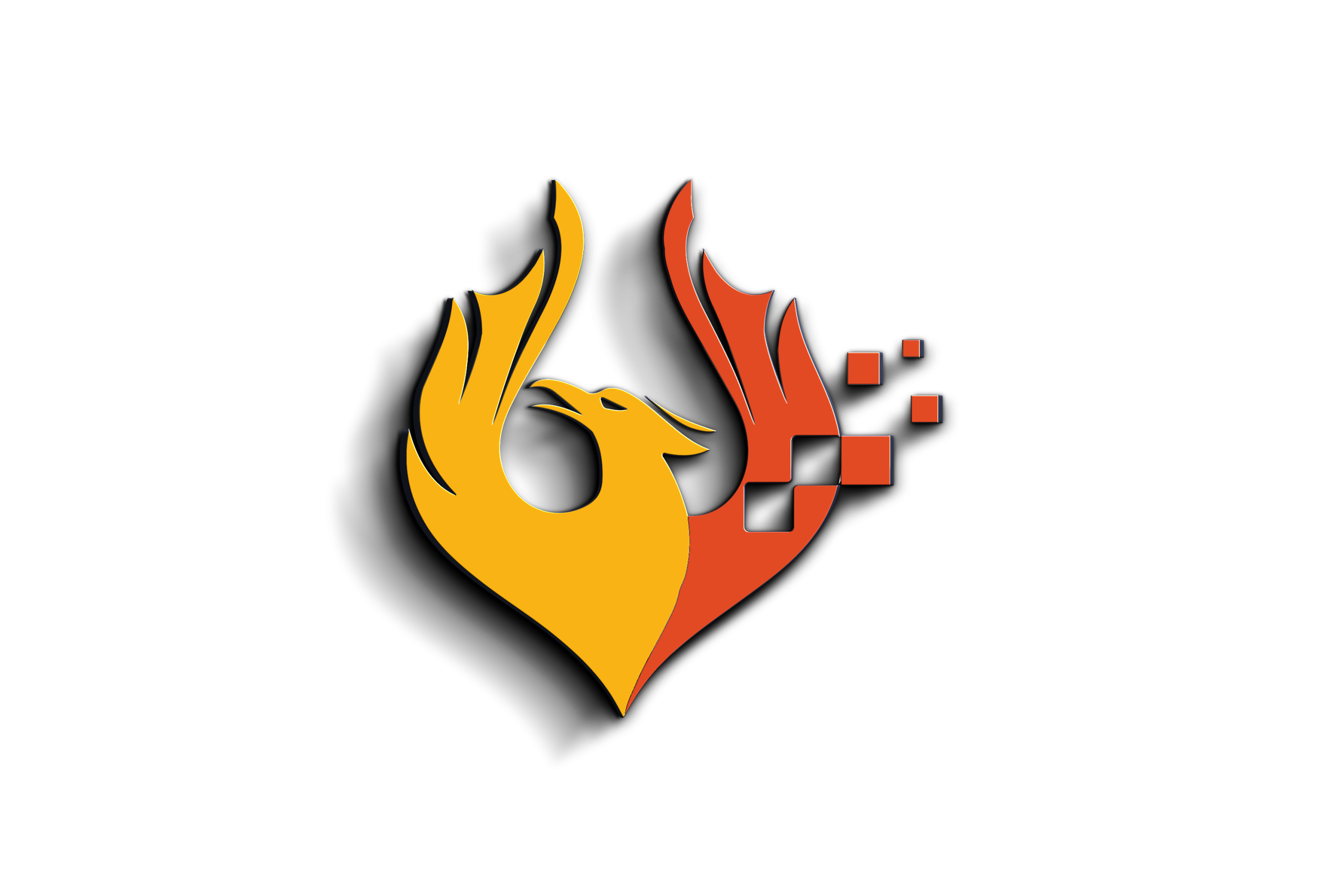
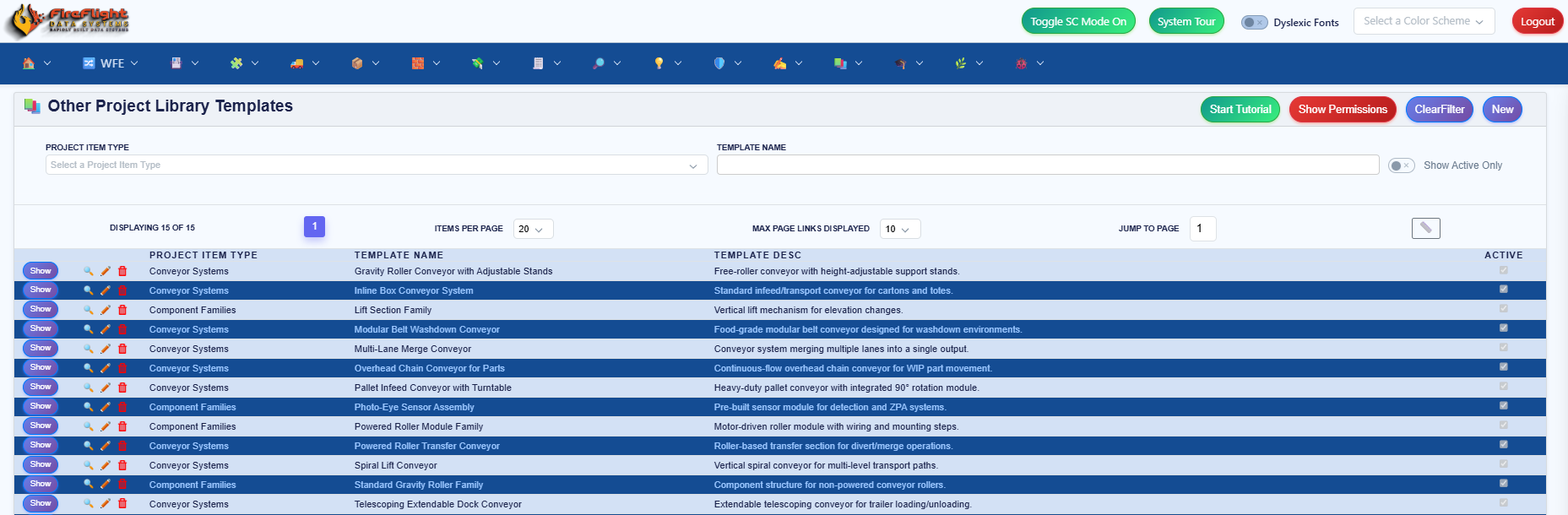
The modules are already built and tested, so the work is configuration, not a rebuild from zero. That is why most FireFlight systems go live in weeks, not months, with a focused build running about 2 to 4 weeks. PCG configures your BOMs, routing, cost centers, and reports for your specific plant before go-live, and existing work order and inventory data migrates as part of the deployment.
Want to see FireFlight running on your kind of operation? Book a live demo and the team walks your BOMs, inventory, work orders, and job costing through the system, then maps what a deployment on your floor would look like.
Book a DemoWhat changes when a plant runs on one system?
A conveyor manufacturer running ten product lines across two plants moved off spreadsheets and a whiteboard onto FireFlight. Here is what changed.
- End-of-day BOM rebuilds stop. Engineering-controlled templates carry the BOM, routing, and costing, and one change reaches every product that uses the shared part.
- Shortages stop surfacing at kitting. MRP calculates requirements from confirmed orders and fires procurement before the gap reaches the floor.
- The schedule reflects reality. Work-center routing runs on real material availability and capacity instead of a whiteboard.
- Product-line profit becomes visible. Job costing attaches actual labor and material to every job as it runs.
- Migration happens without stopping production. PCG moves your data and workflows in stages, and most systems go live in weeks, not months.
Can you just ask your plant a question?
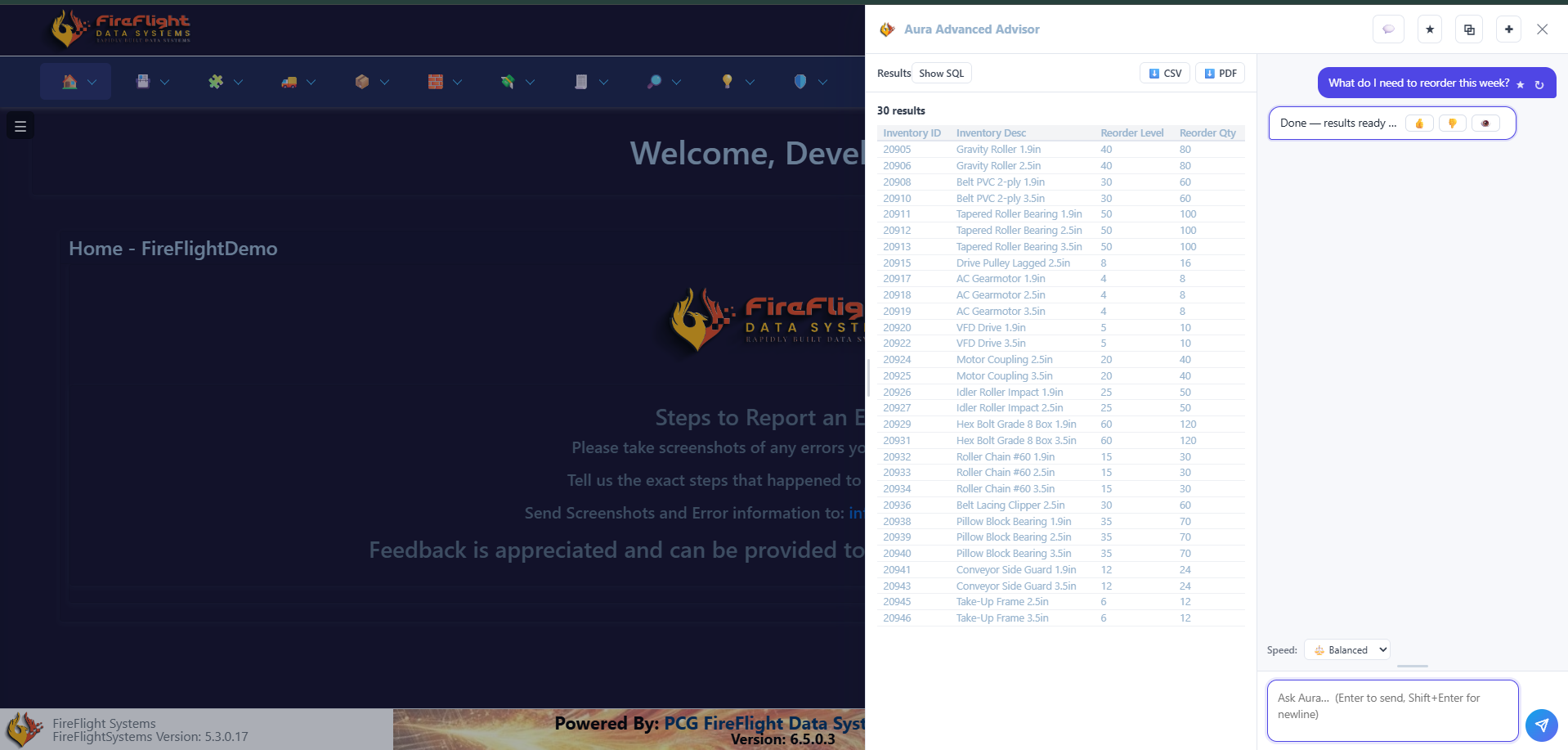
Yes. When you need something specific, you do not build a report or export a spreadsheet. You ask FireFlight in plain English, and it returns the matching records, ready to export. The built-in advisor is part of every deployment, so no one needs SQL or a report builder to get an answer.
Answers from your live data, in plain English
Type the question, get the records. No report builder, no export scramble.
Every answer comes with Show SQL, CSV, and PDF export on the result.
Is FireFlight built for your operation?
FireFlight fits US manufacturing and industrial teams of roughly 20 to 500 employees, especially build-to-order and configured-product shops. It is built and supported by Phoenix Consultants Group. This is you if:
- You build configured or made-to-order products, and every order rebuilds a BOM by hand.
- Shared components change, and the update never reaches every product that uses them.
- Shortages surface at kitting instead of in planning, and rush orders keep rewriting the schedule.
- Profit by product line takes a manual scramble, and your data still sits in Access, FoxPro, or Excel.
FireFlight is developed and maintained exclusively by Phoenix Consultants Group. Since 1995, across 31 years, PCG has built and rescued more than 500 operational systems in over 45 industries, migrating Access, VB6, FoxPro, and Excel workflows onto modern .NET Core without stopping production. The same engineers who configure your plant keep supporting it as you grow.
Questions about FireFlight for Manufacturing
Does FireFlight handle build-to-order and configured products?
Can it run MRP across several products and warehouses?
What happens when we change a shared component?
Can we trace a serialized part back to its QA history?
How long does it take to run on our floor?
Do we have to stop production to migrate?
Can we ask FireFlight questions in plain English?
Every configured order your team rebuilds by hand is time and margin the plant cannot get back. FireFlight puts the BOM, inventory, routing, and job costing on one system, and PCG stands it up without stopping production. Most systems go live in weeks, not months.
Book a Demo
FireFlight Data Systems is a product of Phoenix Consultants Group. PCG founded 1995. All system configurations are custom-built for each deployment. Implementation timelines, module availability, and integration scope vary by organization. Contact PCG directly to discuss requirements specific to your operation.