
Barcode Scanning App: Capture Accuracy at the Point of Every Movement
Real-time scanning across receiving, transfers, picking, and shipping. Offline-first architecture keeps operations running without a network. Full scan audit trail with timestamps and user tracking on every transaction.

Manual inventory entry does not just slow operations down. It introduces errors at a rate that compounds across thousands of transactions per week, and those errors do not show up until they cause a problem: a stockout that was not a stockout, a shipment short by one unit, a bin location record that does not match what is physically there. FireFlight's Barcode Scanning app removes the transcription step from every receiving, transfer, picking, and shipping transaction your team runs, and keeps a complete audit trail of everything that was scanned.
Schedule your free consultationHow does offline-first scanning work and why does it matter?
FireFlight's Barcode Scanning app operates offline-first: scans are captured and stored locally on the device whether or not a network connection is present. When connectivity is restored, all scan data syncs to the system automatically. No transaction is lost. No scan needs to be repeated because the WiFi dropped in the back of the warehouse.
For operations with large warehouse footprints, outdoor receiving areas, or intermittent connectivity, this is the difference between a scanning system that works reliably and one that creates as many problems as it solves. The offline-first architecture means the decision about where to scan is driven by where the work happens, not by where the WiFi reaches.
How do scan-triggered workflows work in FireFlight?
Specific scan events trigger predefined workflows automatically. Scanning an item at the receiving dock triggers a goods receipt workflow. Scanning at a picking station triggers a stock issuance record. Scanning at shipping triggers a dispatch confirmation. Each trigger is configured for your specific operation during deployment so the scan drives the next step rather than requiring the operator to navigate to a separate screen and initiate a transaction manually.
The practical effect is that the scanning device becomes the primary interface for warehouse staff. They scan the item, confirm the quantity if prompted, and move on. The system handles the record creation, the location update, and the downstream workflow trigger. PCG has been configuring scan-triggered inventory workflows for warehouse and distribution operations since the mid-1990s. The configuration that matches your receiving, putaway, picking, and shipping sequences is built before go-live, not discovered through trial and error after deployment.
What apps does Barcode Scanning integrate with?


The audit trail that most warehouse operations are missing: When an inventory discrepancy is discovered, the first question is always the same: what happened? Without a scan audit trail, the answer requires reconstructing the transaction from memory, paper logs, and system records that may not agree with each other. That reconstruction takes hours and often produces a partial answer at best.
FireFlight's Barcode Scanning app logs every scan with a timestamp and the user who performed it. When a discrepancy is reported, the scan history shows exactly what was scanned, by whom, and when. Error correction is available directly from the scan history without requiring a manual journal entry. For operations subject to inventory audits or regulatory review, this trail is not optional. It is the documentation that makes an audit answerable rather than an exercise in reconstruction.

Your Personal Guide on Every Page
From the first click to the final step, Ikhana, your on-screen tutor, shows you how it all works. Every field, every button, every page explained with clarity, right where you need it.
In the Barcode Scanning app, Ikhana walks warehouse staff through scan-triggered workflows, offline sync procedures, and error correction from scan history. New team members are running live scanning operations on their first shift without a dedicated training session for each workflow type.
Learn more about IkhanaWhat does the Barcode Scanning app actually do?
-
 Real-time scanning across all stock records: Every scan posts directly to the inventory record it affects. Receiving, transfers, cycle counts, picking, and shipping all update in real time. No end-of-shift data entry batch. No reconciliation step between what was scanned and what the system shows.
-
Offline-first architecture with sync-on-connect: Scans captured without a network connection store locally and sync automatically when connectivity returns. Warehouse operations in areas with intermittent WiFi or outdoor receiving docks run without interruption. No transaction is lost when the network drops.
-
Scan-triggered workflows for receiving, stocking, picking, and shipping: Predefined workflows trigger automatically from specific scan events. The operator scans and moves on. Record creation, location updates, and downstream workflow triggers happen in the system without requiring navigation to a separate transaction screen.
-
Full scan audit trail with timestamps and user tracking: Every scan is logged with the timestamp and the user who performed it. Scan history is searchable from the affected record. Error correction is available directly from the history without a manual journal entry.
-
Multi-location and cross-warehouse transfer support: Scanning handles transfers between bin locations, zones, and warehouses in a single workflow. Source and destination both update in real time from the same scan sequence without separate transactions at each end.
-
Batch and serial number scanning with verification: Batch updates run without confirmation between each scan for high-volume receiving and transfers. Serial-numbered and lot-tracked items link to the specific transaction at the point of the scan. The traceability record is created automatically rather than entered manually after the fact.
-
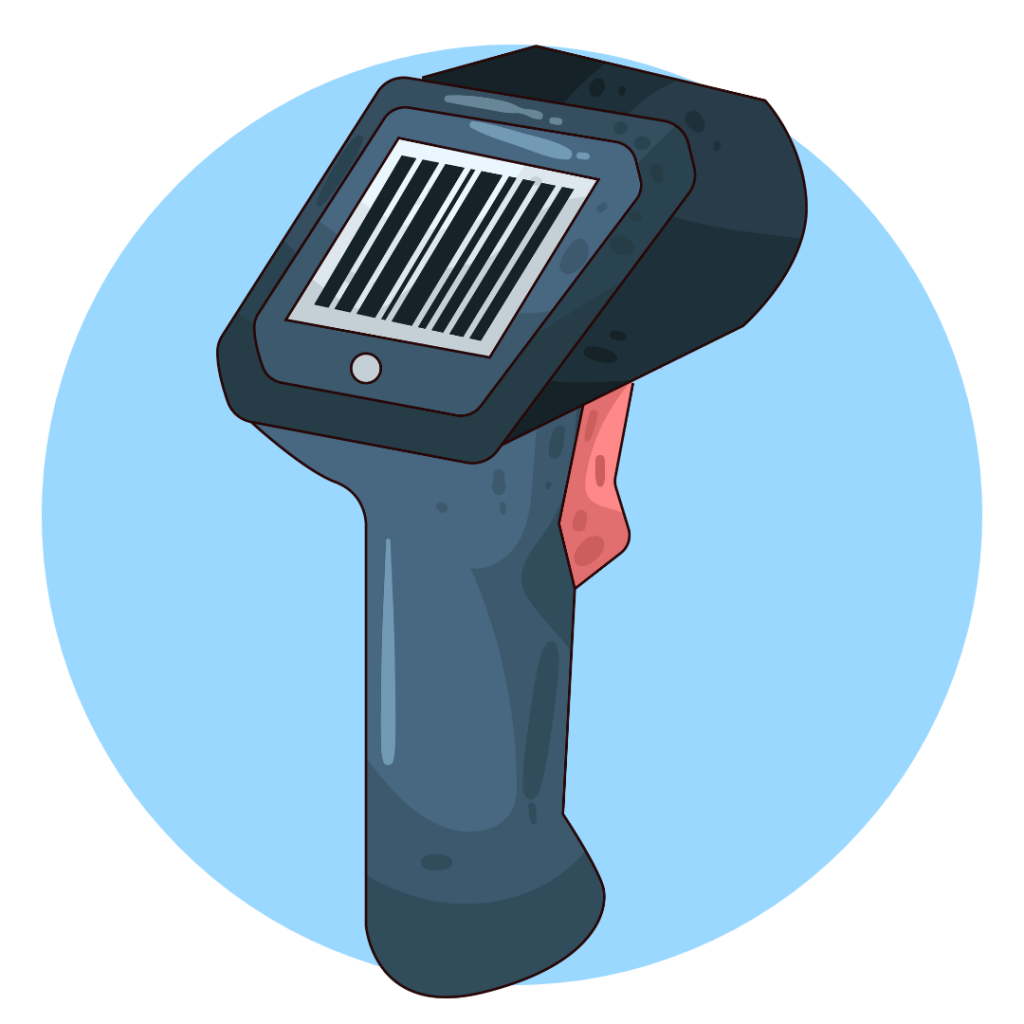
Works on external handhelds and mobile cameras: Standard Bluetooth and USB handheld scanners connect without drivers. Built-in smartphone and tablet cameras work with equal functionality. No proprietary hardware required. Staff use the devices already present in the warehouse.
What PCG learned implementing barcode scanning across 31 years of warehouse and inventory system deployments: The operations that see the most durable accuracy improvement are not necessarily the ones that scan the highest volume of transactions. They are the ones that configured scan-triggered workflows to match how their warehouse actually operates rather than how a generic system assumes it operates.
A receiving workflow configured for your specific vendor label formats, putaway logic that matches your bin structure, and pick confirmation that matches your order fulfillment sequence those configurations are what make scanning stick as a daily practice rather than a system that staff work around when the workflow does not quite fit. PCG builds those configurations before go-live. Most deployments are operational in weeks, not months.
"The scanning app removed hours from our weekly inventory counts. Everything updates instantly and the audit trail has already saved us twice during supplier disputes."Inventory LeadMid-Market Supplier
What changes after deploying the Barcode Scanning app?
-
Inventory entry errors drop immediately. The transcription step where errors were introduced is replaced by a scan that reads the code directly and posts the record without human interpretation between the physical item and the system.
-
Weekly inventory count time falls significantly. Cycle counts run from the scanner floor-to-system without a separate data entry step. The count process becomes part of normal warehouse activity rather than a scheduled event that requires dedicated staff and disrupts operations.
-
Discrepancies surface at the point of the transaction that caused them rather than at month-end reconciliation. The problem is visible when it is still fixable, not after it has propagated through downstream records for three weeks.
-
Audit and supplier dispute responses are answered from the scan history in minutes. The record shows what was scanned, by whom, and when. No reconstruction from memory or paper logs required.
-
Operations in low-connectivity areas run without interruption. The offline-first architecture captures every scan regardless of network availability, so the warehouse floor layout is determined by operational logic rather than by WiFi coverage maps.
Questions about FireFlight Barcode Scanning
What is the offline-first architecture in FireFlight barcode scanning?
 What is the offline-first architecture in FireFlight barcode scanning?
Does FireFlight barcode scanning keep a full audit trail of every scan?
Does FireFlight barcode scanning keep a full audit trail of every scan?
Can FireFlight barcode scanning handle cross-warehouse and multi-location transfers?
Can FireFlight barcode scanning handle cross-warehouse and multi-location transfers?
How does scan-triggered workflow automation work in FireFlight?
How does scan-triggered workflow automation work in FireFlight?
How does FireFlight barcode scanning handle unit of measure conversions?
How does FireFlight barcode scanning handle unit of measure conversions?
Does FireFlight support both external handheld scanners and mobile camera scanning?
Does FireFlight support both external handheld scanners and mobile camera scanning?
How long does the Barcode Scanning app take to deploy in FireFlight?
How long does the Barcode Scanning app take to deploy in FireFlight?
Every manual inventory entry your team makes today is a potential error and a recoverable inefficiency. FireFlight's Barcode Scanning app replaces that entry with a scan that posts directly to the system record, triggers the right workflow automatically, and logs the full audit trail without any additional step. Deployments complete in weeks, not months. PCG configures scanning workflows for your specific operation before go-live.
Schedule your free consultation
FireFlight Data Systems is a product of Phoenix Consultants Group. PCG founded 1995. All system configurations are custom-built for each deployment. Implementation timelines, module availability, and integration scope vary by organization. Contact PCG directly to discuss requirements specific to your operation.