

Receiving Excellence with ASNs: Turning the Dock into a Real-Time Truth Source

Every downstream promise in operations accurate inventory, reliable planning, clean financials depends on an unromantic moment at the dock. What arrives, when it arrives, and how it is recorded shape the story the entire company will tell for weeks. If that moment is handled with clipboards, tribal memory, and a trail of PDFs nobody has opened since they were forwarded, then the next few days will be familiar: a flurry of emails about what should have arrived but didn’t, toggling between purchase orders and packing slips to make sense of quantities, and a scramble to figure out why an urgent line is short one item that everyone swears was “probably on the truck.” The cure is not heroics; it is a design: receiving that is choreographed with an Advance Shipping Notice (ASN), executed with scanning that fits the way dock teams actually move, and reconciled in a way that turns today’s surprises into tomorrow’s predictability.
An ASN is the difference between meeting a truck and meeting a plan. It names the purchase order lines the supplier intends to ship, the quantities, the containerization, and the identifiers you will need to scan. When done well, it also carries the barcodes you should expect to see on cases or pallets and, in a more mature conversation, the lot or serial details for traceability. The point is not to replace the receiving team’s judgment; the point is to spare them detective work. With an ASN, the team isn’t wondering what to expect; they are verifying that expectation, quickly and visibly. If the supplier promises 24 pieces in four inner cases on one pallet, and the dock sees three cases and a loose carton, the discussion starts with math the supplier authored. If a vendor routinely claims that lead time is predictable, the ASN makes that claim measurable as soon as the door rolls up.
For receiving to become a truth source, scanning has to be frictionless. The work is physical first: people are walking, lifting, staging, and moving; devices that require balancing on a knee or squinting at a reflective label fight the grain of that movement. The receiving process must be readable at motion speed, which means the first scan should locate the shipment in the system, the second scan should identify the carton or pallet in a way the software expects, and the third scan should confirm the item and quantity in a manner that never asks a human to key in what a barcode already knows. When a mismatch occurs, the path to resolution must be obvious: a clear prompt to re-scan, a captured photo to document a crushed corner or a missing label, a quick assignment to a quarantine zone with a reason code that quality and purchasing will understand without a phone call.
Staging is often the overlooked bridge between receipt and reality. The window between “we think it’s here” and “it is available to pick” must be visible and short; otherwise, the ledger lies. If a receiving team scans a pallet into existence but then leaves it in limbo because labels need reprinting or quality needs a quick check, the system whispers a half-truth that will bite planners by lunchtime. The cure is straightforward: make “available to pick” the actual threshold for calling something received, and ensure that any steps that delay that state label repair, photo capture for damage, sampling for QA are counted in the clock of lead time. When a supplier delivers at 9:00 a.m. and the stock becomes usable at 2:00 p.m., the dock didn’t fail; the organization just learned that “dock-to-stock” is a measurable part of reality. That learning should appear in dashboards that buyers and suppliers both see, because nothing focuses improvement like a number both sides agree to.

Defects and discrepancies reveal how much your receiving process respects evidence. When a short shipment is logged as “probably vendor error,” that note is a promise to argue later. When the shortfall is captured as a photo, tied to a packaging identifier, and mapped to the affected purchase order line with a reason code, the discussion becomes a correction loop. Suppliers who see that the same corner collapses on their stacked boxes will change their packaging; suppliers who see that your dock repeatedly misreads a particular font size or placement will change labels. In both cases, the ASN and its reconciliation form the language of truth. Over time, the receiving area ceases to be a complaint desk and becomes an inspection bay where information quality is improved at the same time as material quality.
Integrating quality assurance into receiving without turning the dock into a lab is an art. You cannot hold every pallet for every item; you can hold what matters, when it matters, for long enough to trust what follows. This is where risk-based sampling and a sane quarantine design change the shape of days. If you flag high-risk items because of regulatory sensitivity, historical defect rates, or recent supplier changes the receiving team knows in advance that those pallets go to a location with a different sign and a different label color. The system must treat that location as a meaningful place: transactions in quarantine are not invisible, but they are not counted as on-hand for picking. When quality clears the hold, it should be a scan that promotes the inventory to “available,” not an email that asks someone, later, to update a status field that is already out of date.
The financial truth of receiving is uncomfortable and necessary. If you record receipts when the truck arrives, but invoices land days later with different quantities or units, you will spend time reconciling noisy accruals. If you delay receipts until AP blesses the amounts, your inventory will lag reality and operational decisions will suffer. The answer is to honor both clocks. Receive when goods are usable; accrue at that point with the best available price; and let the invoice reconciliation adjust the financial detail without changing the operational fact. This requires a clean match process that flags mismatches by type quantity variances, price variances, unexpected freight and routes them to buyers and finance with the ASN and receipt evidence attached. The result is not perfection, but speed: the organization knows what it actually owns, and accounting knows exactly what still needs confirmation.
A receiving process built on ASNs also changes how you think about space. When inbound is predictable to the carton, staging becomes less of a guessing game and more of a reservation system. The dock crew can stage fragile items closer to quality’s lane, cold-chain pallets directly into the right cooler bay, and high-velocity items near the shortest putaway path to their home bins. Because the ASN is trusted, the putaway tasks can be pre-generated and queued to responsible teams before the truck arrives. Instead of reacting, the dock executes a plan one that adapts to disruptions but doesn’t reinvent itself every hour. Over time, this reduces travel, lowers congestion, and calms the frantic choreography that has long defined “busy” docks.
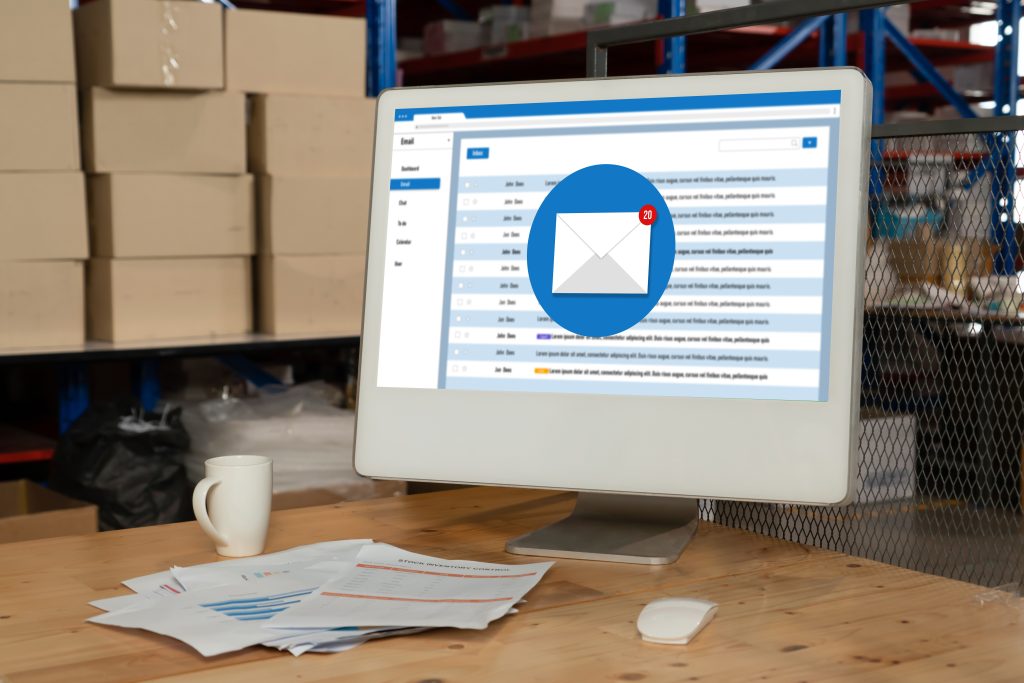
It is worth confronting the fear that ASNs add burden to suppliers who already feel rushed. The paradox is that ASNs actually reduce their hassle when a buyer uses them well. They replace a stream of one-off clarifying emails with a standard format. They pre-empt fights by agreeing to a description of reality before reality arrives. They provide data that suppliers can use to diagnose their own variability. Most of all, they allow suppliers to succeed on purpose: delivering what was promised, in the way it was promised, to a receiving team that is ready to scan and store in minutes. The best proof of this is behavioral: after a quarter of disciplined ASN usage, suppliers begin to push ASN quality because they see faster putaways, fewer rejections, and fewer circular debates.
The mark of receiving excellence is not a banner or a slogan; it is the quiet disappearance of two phrases: “we don’t know where it went” and “we’ll fix it later.” With ASNs, scanning that fits how people move, staging that respects “available to pick” as the real finish line, quality that holds only what risk demands, and finance that recognizes usable truth on time, the dock becomes an origin of clarity. Inventory starts correct instead of being corrected. Planners plan with what exists instead of what emails imply. Buyers negotiate based on measurable lead time and defect trends. The company spends its energy on decisions rather than on rework. In the simplest terms, the dock becomes what it always should have been: the place where reality enters the system.
Template-Driven BOMs and Routings: How Configurable Products Ship On Time Without Spreadsheet Drama

Configurable products terrify schedules not because they are complicated but because they are inconsistent. One customer’s “just like last time” is another customer’s “minus the handle and with a left-hand hinge,” and those words conceal a thousand details. The simplest version of this story ends with a sales promise nobody can build without calling three people who have already gone home. The more common version ends with a set of spreadsheets that try to capture every variant and slowly fail at the edges, creating a gray market of rules that only two specialists can recite. The way out is neither a rigid catalog that refuses to bend nor a free-for-all that calls itself “custom.” It is a template-driven approach that separates what can be parameterized from what must be engineered, captures that knowledge in bills of material and routings that a system can read, and turns configuration into an act of selecting truth rather than inventing it.
The heart of the approach is a product family template that speaks in parameters before it speaks in part numbers. A door is not “Model X with Notes”; it is a height, width, material, finish, hardware set, and swing. A pump skid is not “Standard Except for the Valve”; it is a motor size, frame, control package, inlet and outlet specification, and test requirement. By teaching sales to ask the questions the factory cares about, you replace clever memory with measurable choices. When those choices map to substitutions in a bill of material this latch instead of that latch, this gasket kit instead of the other, this length of cable computed from the geometry you turn the quote into a structure the floor can stage and the planner can buy. The routing works the same way: cut here, weld there, paint with this cure schedule, wire with this gauge, test with that protocol; each step pre-populates with standard times that reflect the parameter values, not an average guess that will be wrong half the time.
None of this is possible if the item master is an archaeological site. Templates force a reckoning with naming. If two part numbers refer to the same latch because one was added for a rush job and never cleaned up, the template will reveal the problem by refusing to decide between them. If a component is missing the dimensional attribute that a formula needs to compute cut length, the template will refuse to compile. This friction is productive; it moves ambiguity forward instead of hiding it in shop talk. Over a few cycles, it has a cultural effect: the product family becomes a shared language, not a private dialect spoken by whoever has been here the longest.
The most significant win in a template-driven model is orchestration. When a quote becomes a configured structure, the system can do the dull but essential things humans are bad at doing consistently: reserve long-lead items, explode demands for shared subassemblies, and stage kitting tasks by work center rather than by the chronological whims of email. Because routings are attached at the configuration stage, capacity views are based on what the factory will actually do, not a hazy assumption that all orders demand the same labor. This clarity lets planners move from roulette to choice. They can see that two orders will collide in paint next Wednesday and adjust, instead of learning the truth at 3 p.m. next Wednesday when both are half-masked and nobody can remember who called the booth first.
There is fear that templates will freeze creativity, that they will declare out of bounds the very custom work that wins deals. The opposite is true when they are used truthfully. A template defines the frequently chosen, safely repeatable subset of possibilities where you should make speed and accuracy your brand. It also defines the boundary beyond which an engineer must engage. By making that boundary explicit, you protect both speed and ingenuity. You do not pretend that a left-hand hinge on a non-reversible frame is “just like last time,” and you do not re-engineer a reversible frame because a note was vague. Instead, your system opens an engineering request with the configuration attached, and the engineering change, once approved, becomes part of the family template for next time if it deserves to be. In this way, the template is not a cage; it is a memory that learns what should be standard and what must be exceptional.

Templates also mend the relationship between sales and cost. In a spreadsheet world, margin is whatever the author remembered on a Tuesday afternoon when the phone rang twice; in a template world, cost rolls up from components and routings that know how long things take when they are built the way you say you build them. When dimensions or materials change, cost changes with them, and price can respond in a way that preserves profitability without forcing every quote to become a meeting. This is not an accountant’s dream; it is the only stable way to promise lead times without emptying the bank in overtime every month. When quotes reflect what the factory can do at the speed the factory can sustain, the rest of the company breathes better. Procurement does not scramble because long-lead hardware was invisible. Scheduling does not hide bad news because no one asked how long the new test protocol actually takes. Quality does not guess which variant is on the floor because the traveler prints with the parameters everyone agreed to.
The change in the traveler itself is more than cosmetic. A template-driven traveler reads like a set of decisions, not a photocopy of last year’s job with hand corrections. It instructs by parameter: “Cut aluminum extrusion to 1,980 mm,” not “Cut to length per notes.” It signals tolerance and finish in ways inspectors can evaluate without a phone call to engineering. It prints labels that already know what the finished item must say, and if serialization is required, it provides the frame for how serials will be assigned and recorded. On the floor, this removes the quiet heroics that once made veterans indispensable and rookies risky. The veterans remain invaluable; they simply spend their time on the exceptions that deserve them.
The gains accumulate in places that were once an afterthought. Rework drops because ambiguity drops. Reordering is cleaner because the kit lists are unambiguous. Document control is less tedious because templated routings carry their own revision logic, and the moment a step changes, new jobs inherit the right version without someone spelunking through a shared drive to find the one PDF that works. Training improves because a new hire can watch the configuration process and see how the choices shape the BOM and the steps; they learn your language by seeing it produce a plan. Even service benefits: when a unit returns, you can read its original configuration and know exactly what spare parts are appropriate; you don’t rely on a customer’s recollection of what might have been installed that winter two years ago.
Perhaps the simplest proof of the template approach is emotional. The company stops having the weekly conversation about why a “simple” order is not actually simple. The meeting that used to collect production, engineering, purchasing, and finance to hash out a dozen one-off questions dissolves into a five-minute check-in about real constraints. People who used to feel like they were chasing each other now feel like they are working from the same page because, in a very literal way, they are. That page is not a hero’s spreadsheet that only one person can modify without fear; it is a living template that the system applies consistently, visibly, predictably. Configuration becomes a discipline, not a dare.

The irony is that templating does not reduce the variety you can offer; it increases the variety you can deliver on time. By making repeatable what should be repeatable and isolating true invention where it belongs, you create speed without lying about difficulty. You can say yes with a straight face to the combinations you have designed to support and you can say yes, wisely, to the engineering requests that expand your family because they should. In both cases, you will close deals with dates you can keep and margins you can defend. That is the quiet power of template-driven BOMs and routings: they make complex feel normal and normal feel easy.
Work Orders That Close Themselves: From Request to Proof-of-Work Without the Fire Drills In many operations, a work order is born in chaos and dies in ambiguity. It begins as an email, a hallway conversation, a scribble on a whiteboard “the conveyor is squealing again,” “that pump is running hot,” “the labeler is skipping every […]
Map the Whole Operation: Designing Multi-Site Location Trees That Make Inventory Findable

Walk through any facility that loses time hunting for parts and you will hear the same sound: radios asking where things are. The problem is not only counting; it is cartography. When locations are vague, inconsistent, or optional, transactions detach from places and the system becomes a ledger of wishes. A coherent location tree site to building to floor to room to cabinet to bin turns the building into a map the software can read and the people can trust. It is unglamorous work, and it is transformative.
The first virtue of a good location model is hierarchy. Everything rolls up to a parent, and nothing floats. The coded path HQC-BLD2-MEZ-RM031-CAB04-BINB3 tells a human where to walk and tells a machine how to compute. It allows you to build cycle-count routes that begin and end in fifteen minutes because they follow physical adjacency; it allows audits to filter by room and cabinet and bin, not by guess. You do not need complex rules if the structure makes sense. You do need discipline: free-text locations are corrosive because they look useful in the moment and become unsearchable the moment after.
Naming is not a place to be clever. Names should be parseable at a glance: building numbers or letters, mezzanines that say MEZ, labs that say LAB, rooms that count upward logically. Cabinets and drawers and bins must obey a pattern that a new hire can understand without instruction. The codes themselves should be human-readable, not only barcode-ready, because in the hour the scanner dies you want the operator to win anyway. A stable name survives a rearranged room; the map can change while the code lives on. This is a small thing with a large effect because it prevents the slow drift of “temporary” stickers and “we moved it last month” excuses that break traceability.
Labels are the embodiment of your model. If they glare under LED strips or turn to mush in the cold room, the system will lie. Door labels should declare the building, floor, and room with large type and a QR to the room’s map. Cabinet labels should display cabinet and drawer codes with a tiny schematic that shows the drawer sequence. Bin labels should carry the full path and leave space for item labels. It sounds fussy; it saves hours. The best label is the one you can scan from the distance you actually work, not the distance of a design screen.
A good tree would be academic if it did not drive processes. In receiving, a putaway task should point to a destination that exists, not a memory in someone’s head. In transfers, scan-out and scan-in should be the rule that produces reliable movement, and the software should nudge when a destination is ambiguous. In kitting, staging to a temporary work-order bin should nest that bin under the room and cabinet where the work will happen so the story of the kit remains readable later. In audits, asking for chain-of-custody at a bin becomes a filter, not a crusade.

Governance is how a clean tree stays clean. New rooms and cabinets shouldn’t appear as folklore; they should be requested through a small form that asks for the parent, the intended purpose, and a photo. Retired locations should not vanish; they should be deactivated with an end date so history remains intact. Once a quarter, pick a sample of bins and walk them; see that the physical label matches the coded path. The walk is not to shame anyone; it is to keep the human and the digital in agreement, because disagreement is where time evaporates.
Metrics tell you whether the map is more than tidy diagrams. If time-to-locate drops, if the percentage of transactions with location scans rises, if mis-slot rates trend down, the structure is doing its job. If cycle routes begin to be completed on schedule because the routes are short and logical, the structure is paying dividends. If investigation time shrinks because movement filters by room and cabinet, the structure is buying back hours. You cannot measure your way out of a bad model, but you can use measurement to make a decent model excellent.
Perhaps the most underappreciated benefit of a location tree is training. New hires learn places before they learn processes. When codes describe reality, comprehension arrives early; when maps match labels and labels match screens, confidence forms quickly. That confidence prevents a predictable pattern: new employees who avoid scanning because scanning feels like friction. When scanning reveals a path, the device becomes a guide, not a hurdle. This is why the location model is not an IT artifact. It is a cultural artifact. It makes a building readable, and readable buildings make reliable operations.
There is a temptation to design from the center out—to perfect the item master, the vendor list, the purchase flow and leave locations for later. But inventory lives in space before it lives in a ledger. A good location tree is an accelerant for every other improvement because it removes a silent tax: the minutes burned searching, the double handling caused by ambiguous bins, the reconciliations that cannot reconcile because the path was never stable. It is worth doing once, doing slowly enough to get right, and then protecting with simple rules that everyone can follow.

In practice, the work is humble. You count buildings and rooms. You decide what a cabinet is and what a drawer is and how many bins a drawer can reasonably hold. You choose a code for quarantine and a substrate for the cold room. You print labels and place them where hands can actually scan them. You walk with people who live on the floor and ask, in their language, whether the path makes sense. You change what does not. You resist the fancy thing that will not survive the second shift. And then one Tuesday, the radios sound different. Someone calls a code, someone else walks straight to it, and the problem you failed to dramatize becomes the problem you quietly solved.
Field Service, First-Time Fix: How to Optimize Van Stock Without Freezing Cash

A field service organization lives on the thin edge between a promise and a driveway. Customers do not care that a part sits in your central warehouse; they care that a technician standing in their facility can restore function before the day turns into a negotiation. The metric that separates companies customers remember fondly from companies they tolerate is first-time fix. Achieving it requires more than charm and effort. It requires a van that behaves like a miniature warehouse with demand that can be forecast, replenishment that responds to consumption, and inventory that tells the truth on the move.
The first obstacle is the myth that van stock is inherently chaotic. It feels that way because vans are mobile, technicians are busy, and workdays rarely end at a depot. But chaos is mostly the result of treating the van as a personal toolbox rather than a mapped, governed space. When a van has a location tree like any other store–left rack, right rack, drawer numbers, labeled bins for fast-moving consumables, secured compartments for serialized parts the technician’s muscle memory learns the pattern, and scanning fits naturally into motion. A technician who can scan a bin rather than think about what the bin is called will scan more often. A system that understands that “Drawer 3 Bin C” is a place, not an idea, can reconcile consumption without begging for reconciliation.
Forecasting demand at van level is not an oracle trick; it is patiently aggregating the patterns the work already reveals. Each territory has seasonal faults, habitually failing components on installed bases of similar age, and a rhythm of callbacks that tells the real story about the last quarter’s learning. The van stock that works does not mirror the warehouse; it mirrors the territory’s blend of urgency and probability. You do not need to be perfect. You need to be sufficiently right about the top fifty items that account for most restores. When those items are available at arm’s length, technicians use fewer grace phrases and more matter-of-fact ones. The relief is audible.
Replenishment is where many van-stock programs collide with fatigue. If the rule is “count your van weekly and submit a list,” your process is a plan for shared frustration. The better path is to let usage drive proposals. Every scan that marks a part as consumed can log a pending replenishment; every return to van stock from a canceled job can negate one. At the depot, kits can be assembled not merely by technician name but by the bins they will restock, and a pick sheet can print in the order a human will load it. The technician becomes a courier of their own readiness rather than an accountant of their own deprivation. When a technician has to work a late call and cannot swing by the depot, a locker pickup or carrier shipment can complete the loop without breaking the next day’s schedule.
Serialized parts create anxiety because they implicate traceability in environments where audits matter. The cure is to behave as if a van were a regulated store even when it is not. A serialized part should change custody with a scan. Its assignment to a customer and asset should happen at point of use, not in a memory typed into a ticket later. If a serialized part returns, the van needs a quarantine compartment with a distinct identity so the system does not lie about what is truly available for the next call. The practice sounds heavy until it saves a morning that would otherwise be spent hunting a serial that was “definitely on the truck last week.”

The relationship between van stock and central planning is more subtle than a weekly order. Van inventory should have service levels defined like any other location, and the consequences of those levels should be visible to both service leadership and procurement. If the company raises the service level for critical fuses from ninety-five to ninety-nine percent, the cash impact should be visible in days of cover and replenishment frequency. If procurement negotiates a new pack size that increases the minimum buy, the van plan should show how much space and capital the change consumes. This is the hidden negotiation that turns anecdotes about “never having the right parts” into decisions about dollars and drawers.
There is a persistent fear among finance teams that van stock is a thief who steals working capital and hides it from audit. The fear is justified when vans behave like caches. It fades when vans behave like mapped stores. With scanning, location identity, and periodic reconciliations tied to actual work orders, the difference between a bin on a shelf and a bin in a van is only a speed limit. Control becomes a matter of routine rather than a quarterly drama. Auditors learn to ask for three things: where a part was when the technician claimed it, where it went when the technician used it, and what part replaced it when the depot restocked the van. If you can answer those three with a screen and a serial, suspicion turns into praise.
Culture makes or breaks the program. Technicians are rightly skeptical of systems that demand typing while a customer watches. The antidote is to make the right action the easiest action. If opening a ticket on a phone shows the asset history and the likely parts given the fault code and the model, selecting a part feels like a continuation of diagnosis, not a separate chore. If closing a ticket prompts a quick scan of the used parts and the van bins where returns belong, the habit forms because it saves the technician from a later, more annoying reconciliation. People call this gamification. In reality, it is respect for attention. When the system respects time, the people who own the time respect the system.
As the months pass, the organization will feel the benefits in places that never appear on a van diagram. First-time fix rises because the van carries what the territory predictably consumes. Customer satisfaction rises because technicians stop promising to “be back tomorrow” except when engineering is truly required. Revenue stabilizes because billable work closes on the first visit, and technicians have room for an additional appointment most days. Warranty costs fall because the right part begets the right procedure, not a workaround with a later cost. Even recruiting improves; technicians talk to each other, and the company that sends people out with vans that work earns a reputation for professionalism that is hard to fake.
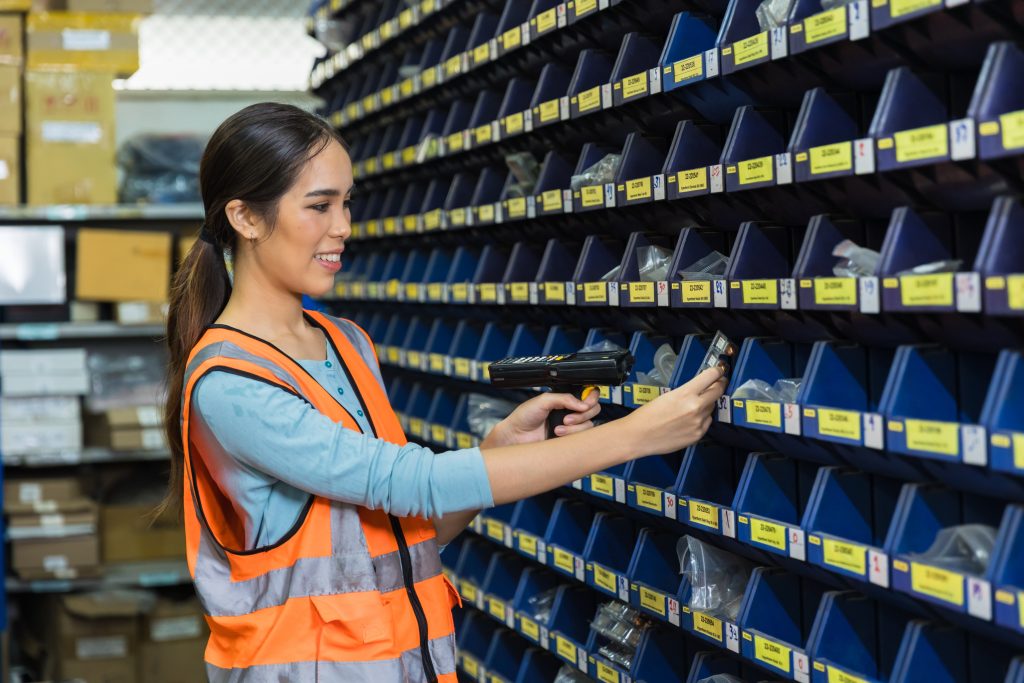
The strangest compliment a van-stock program can receive is silence. Customers stop telling stories about your service because they no longer have to. They call; someone comes; the problem is solved; they move on. Internally, the talk shifts as well. You stop blaming technicians for not being prepared; they stop blaming purchasing for not understanding the day; purchasing stops blaming forecasts for being mystical. Everyone begins to share an uninteresting but beautiful belief: that the right part in the right bin in the right van, made visible to the right person at the right moment, turns stress into procedure.
The goal is not to turn technicians into warehouse clerks or vans into shrines to control. The goal is to organize just enough truth to let professionals do the work they trained to do. When you achieve that balance, first-time fix stops being a campaign and becomes a property of the way you run. You will still have surprises. The world keeps inventing them. But they will feel like exceptions again rather than a description of every day. In a life of driveways, that is no small relief.
Exception Management that Actually Resolves Root Causes

Most operations don’t suffer from a lack of data; they suffer from the wrong relationship to it. Screens light up with alerts, inboxes fill with notifications, and dashboards blink like city skylines at midnight. Yet the floor keeps asking the same questions: which problems matter now, what should we do first, and how do we make sure this doesn’t happen again? The term “exception management” is often used as if exceptions were a nuisance to be swatted away. In practice, exceptions are the only moments when the system tells the truth about where the design fails. The point is not to mute them; it is to turn them into a disciplined path from signal to permanent fix.
The path begins with a reversal of incentives. If you design alerts for maximum sensitivity, you will get maximum noise. If you design them for narrative clarity, you will get fewer signals and more action. The distinction seems philosophical, but it plays out in ordinary minutes. Suppose inventory tolerance is set so tight that every minor variance raises a flag. People stop trusting the flag and begin to invent rituals for clicking it away. Now change the rule so that the alert fires when a variance endangers a pick for an actual order in a specific window, and require proof when it is dismissed. Suddenly, the same red badge is not a nuisance; it is a commitment. The system is not begging for attention; it is promising that your attention will change the day.
This is where evidence enters the culture. Exceptions should capture the facts of their own resolution so the company can learn from them without convening a tribunal. When a purchase order is late by a day, the story often ends with a shrug and a joke about traffic. When the system asks for a two-sentence reason and a photo of the pallet that arrived short, it creates a tiny case history for the buyer and the supplier to review. Multiply this across quality holds, mislabeled bins, failed cycle counts, and out-of-range readings in preventive maintenance, and you create a library of reality. The library is not a punishment; it is a mirror. People stop arguing about anecdotes because they can see the pattern in the pictures and the timestamps.
Triage is the next discipline. In chaotic environments, every exception feels urgent and personal, and escalation becomes the only lever people trust. A proper triage reframes the day. It ranks exceptions by consequence and reversibility and assigns them to roles that have the power to act. The person who can move a pallet out of quarantine is not the person who can renegotiate a supplier’s lead time; the person who can fix a label template is not the person who can decide that the cold room needs a different substrate. Exceptions routed to people who cannot resolve them become wounds that never close. Exceptions routed to a role with clear authority become part of a calendar of small victories.
There is a temptation to analyze exceptions in monthly reviews, far from the place they were born. The better practice is to design a fast, daily rhythm that turns today’s noise into tomorrow’s silence. The rule is simple: an exception should either be resolved within a short, pre-agreed window or promoted to a small root-cause effort with an owner and a date. The promotion matters because it abolishes the limbo where a known problem accumulates new examples. If cartons peel in the freezer, logging the next ten peels does not heal the substrate. A root-cause effort that changes the label stock, the placement, or the handling instruction does. In this rhythm, the daily meeting is no longer a ceremony of despair; it is an inventory of near-term promises and a gateway to permanent fixes.

All of this depends on making exceptions legible to those who do not live in the system all day. Executives need to read exception trends the way meteorologists read weather: not as interesting incidents, but as patterns that portend cost and risk. A finance leader can understand a procurement variance if the graph shows how lead-time volatility translates into safety stock and cash. A quality director can understand the productivity hit of overzealous holds if the dashboard shows how many pallets were detained without resulting in defects. The art is to stop speaking in the dialect of raw counts and start speaking in the grammar of consequences. Exceptions must be framed as lost orders avoided, minutes saved, and dollars preserved, not as badges cleared.
Exception management fails when definitions drift. If you measure on-time at the dock while planners experience on-time at the moment stock becomes usable, the same supplier will look both good and bad depending on the meeting. If you call a cycle count “accurate” when evidence shows that the label was unreadable, you will improve a statistic and degrade the floor’s belief in your process. The definitions should fit the physics of work: on-time means available to pick; accurate means reconciled with a record you can trace through scans; resolved means a remedy was applied, not a comment field was filled. The stricter the definition, the calmer the conversation, because the numbers behave like reality.
Technology helps not by being clever but by being relentless. An exception feed that shows a textual summary and a timeline, that embeds the photo the technician took and the clip the supervisor recorded, that links to the purchase order, the vendor scorecard, the item master, and the location history, removes the last excuses for delay. People do not need to assemble a case from four systems and two memories; the case arrives ready. Because it arrives ready, people can develop the habit of closing what they open. They can hold each other to the standard of leaving a place better than they found it. It sounds moral; it is mechanical. When the path to closure is straight, closure happens more often.
The cultural and economic payoff appears the way all compounding benefits appear: quietly, and then obviously. As noise recedes, people experience a rare workplace gift: attention. They resolve the hard problems because the trivial ones no longer ambush them. Rework diminishes because the sources of error shrink. Overtime becomes a choice for peak opportunity rather than a tax for preventable surprises. Audits compress from long, anxious hunts into short demonstrations, because exception histories prove that the organization saw what went wrong and made durable changes. Customers notice that delivery promises stop slipping. Suppliers notice that your feedback grew sharper and your praise grew more specific. Exceptions transformed from an atmosphere into a curriculum.

The last step is humility. No design will kill every surprise. The question is whether the next surprise becomes another alert to mute or the next lesson your system is capable of learning. In a company where exception management works, people feel licensed to surface the odd thing, the first hint of drift, the strange label, the unexpected spike. They do not fear that the messenger will be blamed for the message. They trust that the message will be recorded, routed, solved, and remembered. That trust is not sentimental. It is the texture of a place where problems go to become smaller, not larger. It is the texture of operations that treat reality as a friend.